Treatment: Available Therapies
Image 1: Click on image to enlarge. A large variety of controllers are available globally and, depending on locally approved formularies, may be available in SA. Image 2 contains a breakdown of controllers shown to be effective in large clinical trials. (Not all medications listed in Image 2 for use in asthma have been approved in SA at the time of publication of this guideline; regulatory approv
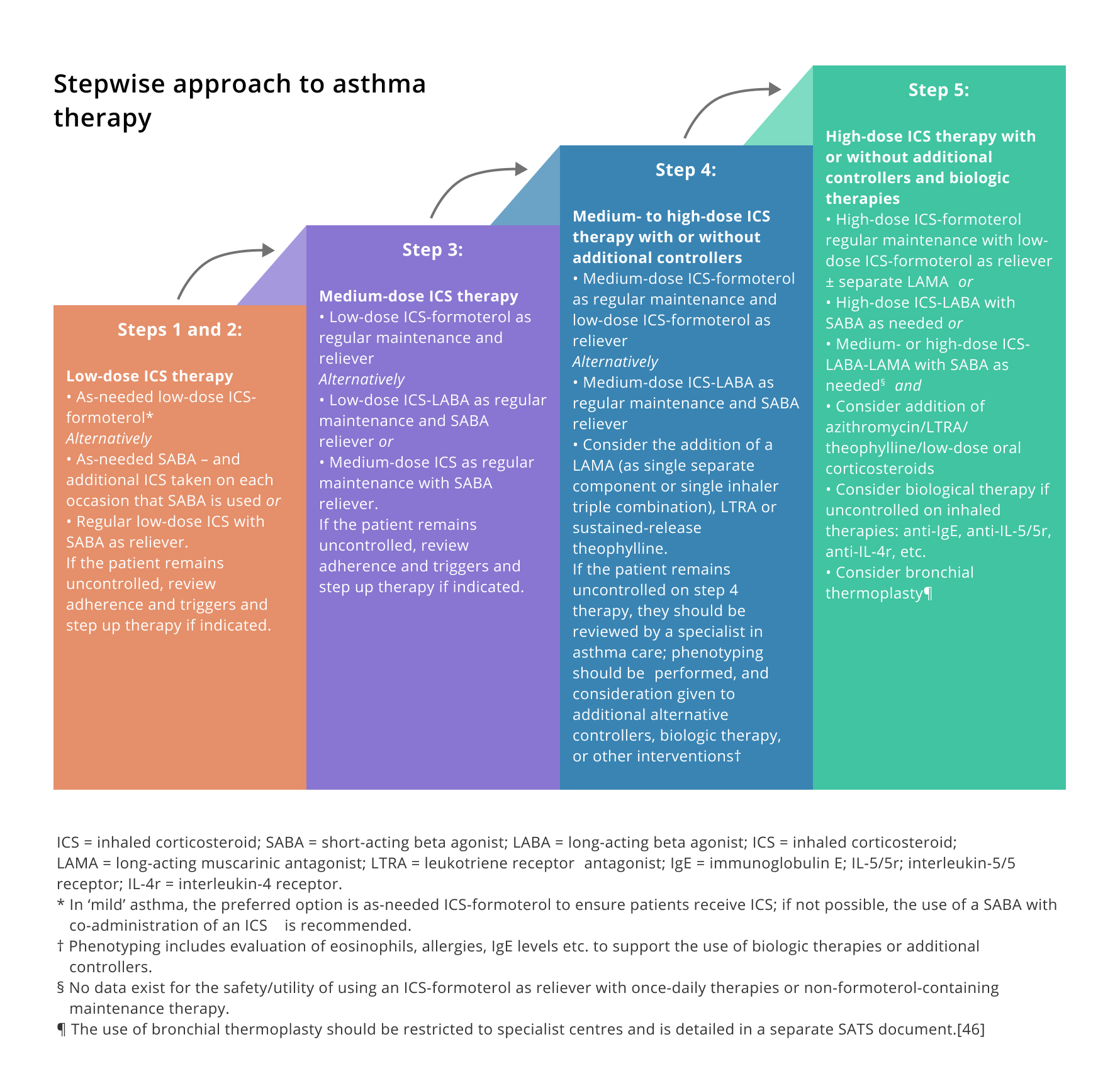
Image 1: Click on image to enlarge.
A large variety of controllers are available globally and, depending on locally approved formularies, may be available in SA. Image 2 contains a breakdown of controllers shown to be effective in large clinical trials. (Not all medications listed in Image 2 for use in asthma have been approved in SA at the time of publication of this guideline; regulatory approval must be confirmed prior to prescribing.)
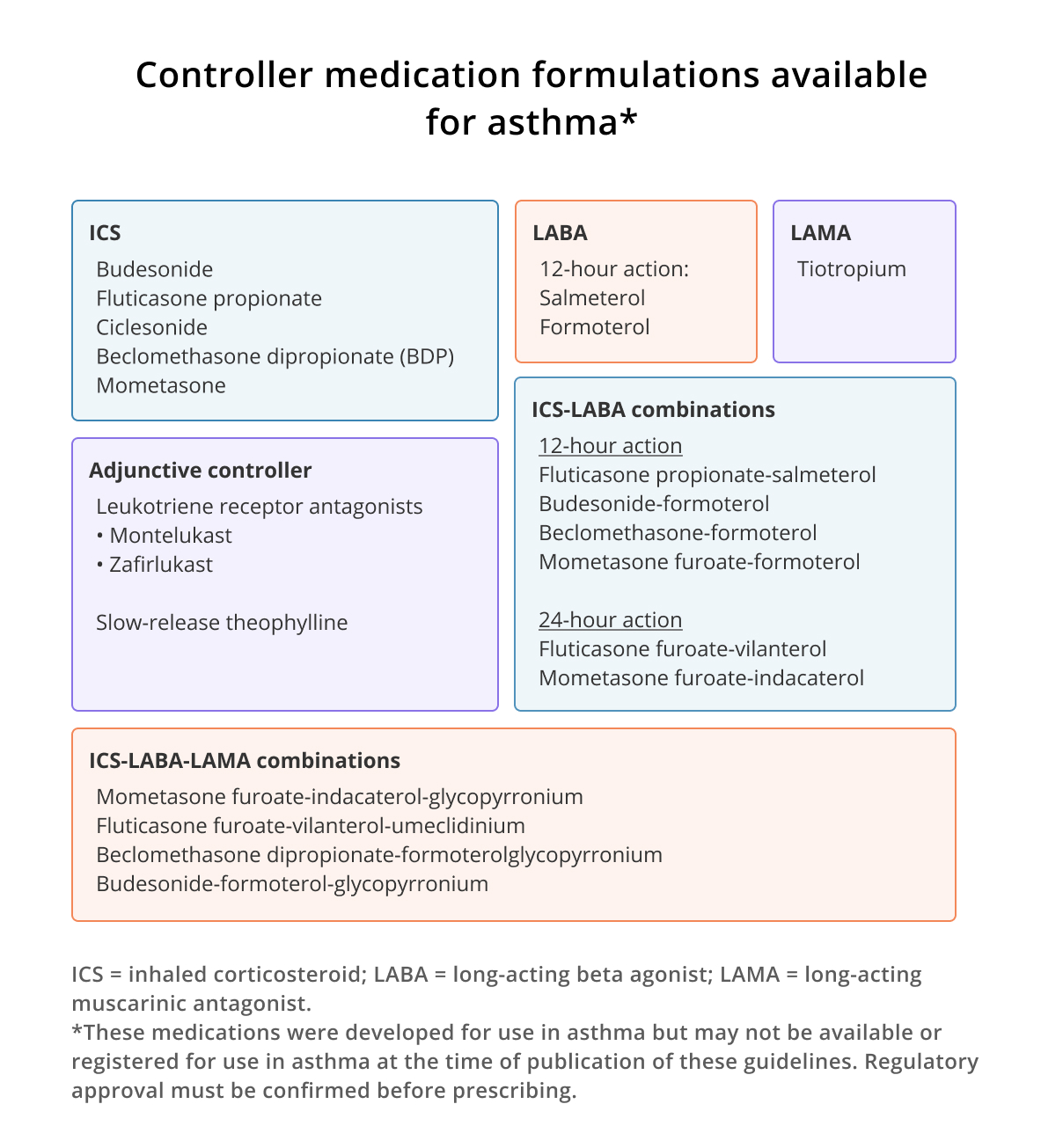
Image 2: Click on image to enlarge
Reliever therapies for asthma
Relievers are short-acting bronchodilators that are used for acute symptom relief. SABAs are the most commonly prescribed reliever medications and include salbutamol, fenoterol and terbutaline.
SABAs provide relief from acute symptoms of asthma and are usually prescribed as 200 μg salbutamol as needed (Evidence A). Patients with well-controlled asthma require use of a reliever less than twice a week. Overreliance/abuse of SABAs has been associated with significant mortality and should strongly be discouraged.[18-20] Current evidence suggests that using an anti-inflammatory-reliever combination (ICS-formoterol) in mild asthma is superior to a SABA alone and should be considered as first choice in patients with mild asthma taking intermittent medication only.[15,16] In more severe disease, the ICS-formoterol combination can continue to be used as reliever as well as maintenance, if on the same maintenance inhaler (so-called MART – maintenance and reliever therapy).[21]
In patients using non-ICS-formoterol maintenance therapy, such as fluticasone-salmeterol, there are no data to support safety or efficacy of using ICS-formoterol as the reliever, and a SABA should be used as the reliever in this situation.[1]
Short-acting anti-muscarinic (SAMA) drugs such as ipratropium bromide work by inhibiting vagally mediated bronchoconstriction and are not the preferred reliever in asthma. They may be used in patients, particularly the elderly, who cannot tolerate SABA side-effects, or patients who are intolerant of SABA.[1]
Anti-inflammatory agents
Inhaled corticosteroids (ICSs)
Anti-inflammatory treatment with an ICS is recommended for all patients with chronic asthma.[1] Their long-term use in optimal doses decreases exacerbations and mortality.[18] Systemic absorption of an ICS arises from oropharyngeal absorption and to a lesser extent from drug deposited in the lungs. This may be reduced with the use of a spacer device combined with rinsing of the mouth after inhalation (Evidence A). The former increases the fraction delivered to the lung (Evidence A). Both measures reduce the incidence of local side-effects such as dysphonia and oropharyngeal candidiasis. DPIs cannot be used with a spacer. Ciclesonide may be considered for patients with local ICS side-effects as it is a pro-drug and activated only in the lung.
ICS therapy can be administered once or twice daily as single medications or in combination with a LABA and LAMA. Doses of ICS are classified as ‘low, medium or high’. These are not potency equivalence, but broad groupings based on clinical effect from trial evidence.[1] When in combination with a LABA or LAMA, the dosing may further vary, and manufacturer package leaflets should be consulted to clarify dosing. Low-dose (total daily dose) ICS include: budesonide 200 - 400 μg, fluticasone propionate 100 - 250 μg, or ciclesonide 80 - 160 μg. Medium daily doses are: budesonide 400 - 800 μg, fluticasone propionate 250 - 500 μg, or ciclesonide 160 - 320 μg. High-dose ICS: budesonide >800 μg, fluticasone propionate >500 μg or ciclesonide >320 μg.[1] There are individual and combination inhalers with varying doses of ICS. A comprehensive table detailing the individual and combination corticosteroid containing inhalers can be found in the GINA guidelines: Box 3 - 6 ‘Low, medium and high daily metered doses of inhaled corticosteroids (alone or with LABA)’.[1] This table provides a comparison of ‘low, medium and high’ ICS doses and should be consulted when clarity is required on a particular inhaled ICS, device or combination.
At higher doses, the dose-response curve of ICSs is relatively flat, with increased risk of systemic side-effects such as growth retardation, skin bruising, cataracts, diabetes mellitus, dyslipidaemia, Cushing syndrome and osteoporosis. When used in combination with a LABA and LAMA, a lower dose of ICS is needed for the same clinical outcome, thus reducing total exposure to corticosteroids. The majority of asthma patients should achieve adequate symptom control with low- or medium-dose regimens of ICS. Those requiring long-term higher doses of ICS to control symptoms should be referred to a specialist in asthma care for review. Strategies to minimise osteoporosis such as regular exercise, calcium supplementation and hormonal replacement in postmenopausal women, should be considered.
Nebulised corticosteroids are expensive, require high-pressure nebulisers (not ultrasonic) for optimal delivery, and are not recommended for routine use in chronic asthma. Long-term oral corticosteroids should only be considered in patients with severe asthma refractory to treatment after all other treatment options have been exploited, and preferably with referral to a specialist centre for evaluation. International guidelines[1] recommend using a biologic therapy rather than long-term oral corticosteroids.
If asthma control is achieved with the combination of low-dose budesonide with formoterol twice daily, then the option of MART should be considered. With this strategy, the same inhaler is used for daily maintenance therapy as well as reliever therapy, thus avoiding two separate inhalers. This method is only possible with formoterol-containing combinations owing to formoterol’s fast onset of action and safety profile. Salmeterol is not suitable owing to its slower onset of bronchodilation and a safety concern when administered in other than the recommended dose.
Sustained action bronchodilators
Long-acting beta-2 agonists (LABAs)
Salmeterol and formoterol are LABAs that are administered twice daily because of their longer duration of action but should never be used without co-administration of an ICS. Formoterol, a LABA with a rapid onset of action similar to a SABA, has a linear dose response curve and, in combination in a single inhaler, can be used both as a reliever and as maintenance therapy.[21] Formoterol doses up to 96 μg/day have been used without major adverse events. Ultra- LABAs, with a duration of action over 24 hours, are available in combination with an inhaled corticosteroid as a once-daily option.[22,23] Salmeterol is not suitable for acute relief of asthma symptoms because it has a delayed onset of action and is limited by the ceiling dose of 50 μg twice daily. Side-effects of LABA drugs include palpitations, tremor, nausea and nervousness.
Long-acting muscarinic antagonists (LAMAs)
LAMAs are recommended as monotherapy for patients with moderate COPD.[24] In asthma, when added to maintenance treatment with ICS alone or ICS/LABA, they improve lung function and may reduce the risk of exacerbations. Their effect on asthma symptoms is less consistent.[25-27] They should be considered in patients who are uncontrolled on medium- to high-dose ICS-LABA.[1]
There are currently no data to guide the clinician’s decision on whether to add a LAMA or ‘step up’ to a higher dose of ICS in a patient uncontrolled on medium ICS-LABA. Prescription of a LAMA should be considered in patients who are uncontrolled on high-dose ICS-LABA.[1]
Adjunctive controller therapies
Leukotriene receptor antagonists (LTRAs)
LTRAs inhibit the leukotriene pathway of asthma inflammation but have weak overall anti-inflammatory effects compared with low-dose ICSs.[28] They have been shown to improve asthma control and exert their effect within days of commencing treatment. They may be of benefit in aspirin-exacerbated and catamenial asthma. LTRAs are not recommended as monotherapy in ‘mild’ asthma. They should instead be considered as add-on treatment in patients on an ICS regimen. If no benefit is evident after 4 weeks, the LTRA should be withdrawn because not all patients respond. Patients should be counselled about neuropsychiatric side-effects.[29]
Slow-release (SR) theophylline
The role of oral SR theophylline in the control of asthma is limited and should only be considered in patients with severe or difficult-to-treat asthma not responsive to inhaled therapies. Formulations of SR theophylline have a 12-hour, and some a 24-hour, duration of action. Their disadvantages include a narrow therapeutic range, drug interactions and frequent side-effects (nausea, vomiting, abdominal pain, gastro-oesophageal reflux, palpitations, insomnia, irritability and seizures).[30,31]
Low-dose oral corticosteroids
Chronic oral corticosteroids are associated with significant long-term side-effects and should only be considered when all other options have been exhausted. The lowest possible dose should be used and preferably never more than 10 mg prednisone equivalent per day.
Azithromycin
Add-on azithromycin given thrice weekly has been shown to reduce exacerbations in patients taking high-dose ICS-LABA (Evidence B).[32,33] Significant side-effects include potential cardiac events (QT prolongation), antimicrobial resistance and gastro-intestinal intolerance may occur. Azithromycin 500 mg three times a week should only be initiated after specialist review in patients who are poorly controlled on high-dose ICS-LABA combination therapy.
Non-pharmacological interventions
In addition to managing the direct airway inflammation and symptoms, several other interventions have been shown to benefit people with asthma and should be considered:
- smoking cessation not only reduces future risk, but also improves response to therapy
- avoidance, where possible, of occupational and environmental pollution
- avoidance of allergic sensitisers – animal dander/pollen, etc.
- vaccination for influenza, pneumococcus and COVID-19
- written asthma action plan to encourage appropriate self-management.
Biologic therapies
In patients who are uncontrolled on medium- to high-dose ICS combinations, treatment with a targeted biologic therapy is now possible. Asthma phenotypes, referred to as atopic/non-atopic or type-2 high/type-2 low, may respond to specific therapies targeting the underlying asthma pathway. Type-2 high inflammation is characterised predominantly by cytokines such as IL-4, IL-5 and IL-13, which are produced by the adaptive immune system in response to allergens.[34] Some of the common biomarkers used to identify type- 2 inflammation include blood and sputum eosinophil counts as well as fractional excretion of nitric oxide (FeNO) levels.[35]
Prior to considering the use of a biologic therapy, the patient must be reviewed by a specialist. Adherence, inhaler technique, the presence and treatment of comorbid diseases, and elimination of extrinsic triggers (smoking, allergies) must be considered prior to prescribing these agents. In addition simple phenotyping should be performed to confirm the presence of type-2 inflammation, which serves both as an indication for currently approved biologics and predicts a favourable response. Type-2 status is suggested by elevated blood eosinophils, elevated serum IgE, evidence of atopy (confirmed from history and/ or skin prick or serum specific IgE to common allergens) and/or elevated FeNO.[36] The biologic therapies currently registered in several countries abroad are shown in Table 1.
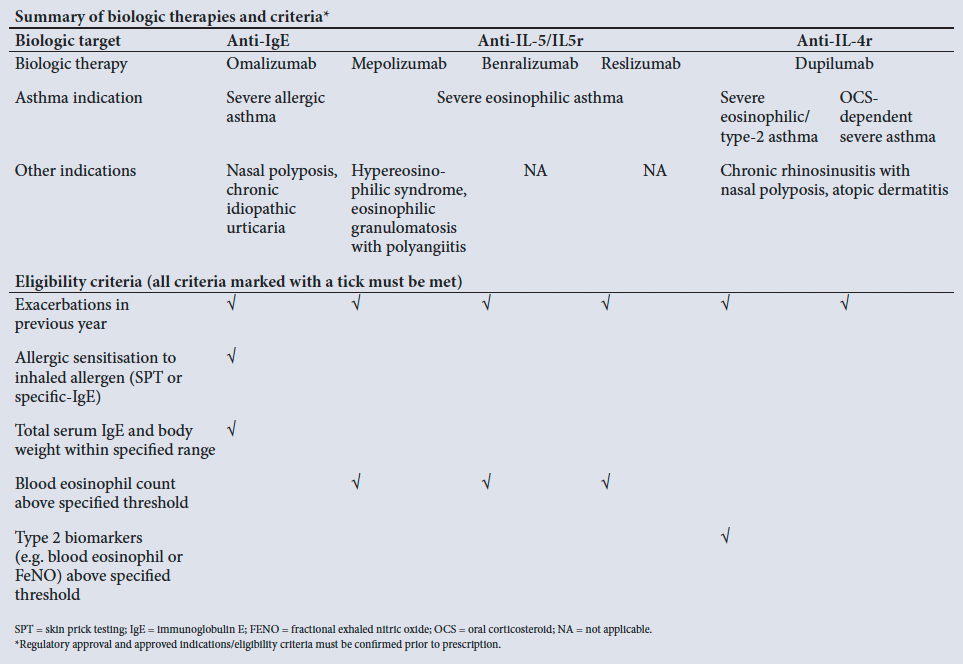
Table 1: Click on table to enlarge
Anti-IgE (omalizumab)
Omalizumab is a monoclonal antibody to circulating IgE. It has been available for over 20 years and is used in patients with type-2 high asthma and specifically requires documentation of a raised serum IgE level as it is dosed based on body weight and IgE level.[37] Omalizumab has been extensively used and recent data have shown safety in pregnancy and additional indications such as nasal polyposis.[38,39]
Anti-IL-5 (mepolizumab/reslizumab) anti-IL-5r (benralizumab)
Mepolizumab and reslizumab target IL-5 and have been shown to reduce exacerbations, but efficacy is restricted to patients with an eosinophil count greater than 150 and 400 cells/μL, respectively in patients on medium- to high-dose ICSs. Benralizumab targets IL-5r and similarly requires patients to have a raised eosinophil count >300 cells/μL treated with high-dose ICS.[40-42]
Anti-IL-4r (dupilumab)
Dupilumab targets the IL-4 receptor and blocks both IL-4 and IL-13. It reduces exacerbations in patients with and without raised blood eosinophils on a background of medium- or high-dose ICS.[43,44] It has been licensed for use in atopic dermatitis and in patients on medium/ high-dose inhaled or oral corticosteroids.
Several other biological therapies are under development, including anti-TSLP, IL-17, IL-33, etc. but have not been approved widely for clinical usage. Anti-TSLP appears to be of value in those with both TH2-high and TH2-low phenotypes. These newer therapies have a role in the management of poorly controlled asthmatic patients who have frequent exacerbations; however, their cost is currently a significant barrier to their widespread use.
Bronchial thermoplasty (BT)
BT refers to the application of radio-frequency-generated heat energy to large and medium-sized airways.[45] It is only recommended in patients with severe uncontrolled asthma who are not responsive to inhaled therapies. Patients who cannot access, or have failed biologic interventions (e.g. anti-IgE, anti-IL-5 and anti-IL-4 immunotherapy), may be considered for BT. It is recommended only to be performed in referral centres with experience in severe asthma and the procedure. Patients should be counselled about the efficacy and long-term safety of BT, uncertainties surrounding BT, and the potential for BT to cause an exacerbation or initial worsening of their symptoms. Recommendation for the use of BT in SA have been published.[46] The lowest possible dose is ideally <10 mg prednisone equivalent per day. Image 1 outlines the recommended stepwise approach to asthma therapy with options for treatment choices at each step.
Guidelines for the management of asthma in adults and adolescents, South African Thoracic Society, 2021