Urinary Tract Infections
This guideline aims to assist healthcare workers with antibiotic prescribing for common clinical syndromes in adult patients in South Africa, utilizing Local and International guidelines, key publications, and expert opinion.
Uncomplicated UTI
Complicated UTI
UNCOMPLICATED UTI
Definition
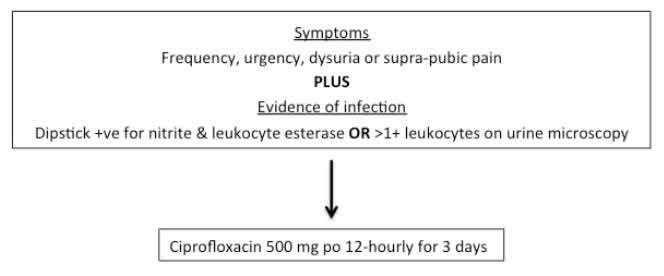
‘Uncomplicated’ refers to either a lower urinary tract infection or upper urinary tract infection (pyelonephritis) in non‐pregnant women with structurally and neurologically normal genitourinary tracts. Acute uncomplicated cystitis is defined as:
- Symptomatic bladder infection characterised by a clinical syndrome of frequency, urgency, dysuria or suprapubic pain
Common aetiologies
| Pathogens | Common contaminants of urine cultures |
|
|
Tests
- Urine culture only for:
- Reinfection, persistent or recurrent cystitis
- Symptoms with negative dipstick
- Do not perform follow-‐up cultures if symptoms have resolved
- Do not perform screening cultures in asymptomatic diabetics, elderly or patients with indwelling urinary catheters
Diagnosis and management
The diagnosis of urinary tract infection requires the presence of compatible symptoms plus bacteriuria (bacteria in the urine) or indirect evidence of infection, such as:
- Urine dipstick leucocyte esterase or nitrite positive
- Urine microscopy showing > 1+ leucocytes
Asymptomatic bacteriuria (a positive urine culture from patients without symptoms referable to the urinary tract) should not be treated, except in pregnant women and prior to invasive urological procedures.
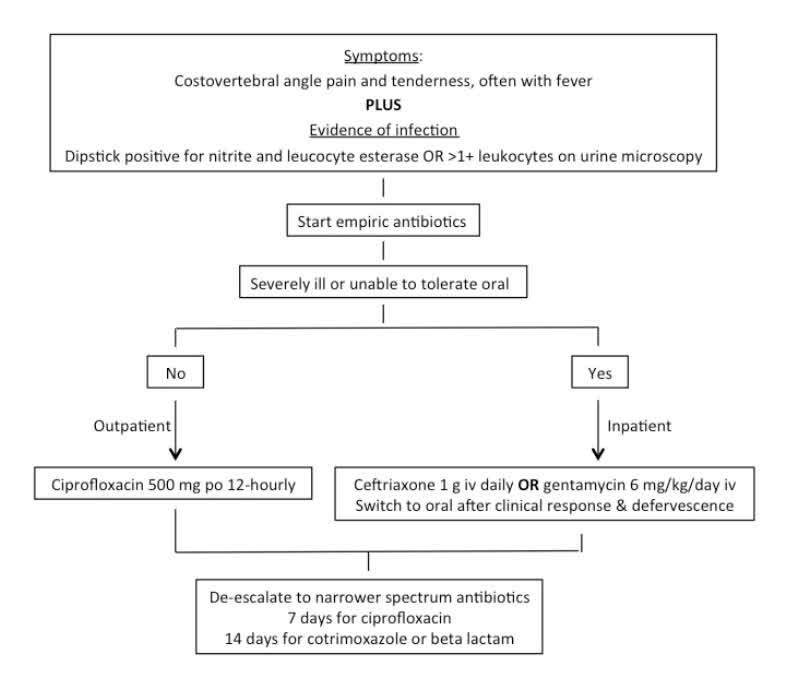
PYELONEPHRITIS
COMPLICATED UTI
Definitions
A symptomatic urinary tract infection in:
- Individuals with functional or structural abnormalities of the genitourinary tract
- Men
- Pregnant women
- Patients with indwelling urinary catheters
Common infectious aetiologies
Caused by the same pathogens as uncomplicated UTIs. Infections in patients with indwelling urinary catheters more likely to be caused by drug resistant organisms.
Tests
Perform urine cultures in all of the above patient groups presenting with symptoms of UTI. In catheterised patients urine specimens should be obtained after catheter removal from a freshly placed catheter or voided midstream sample.
If fever/symptoms persist > 48 hours:
- Perform blood culture (in case of resistant bacteria)
- Image the urinary tract and abdomen to exclude collections
CATHETER ASSOCIATED UTI
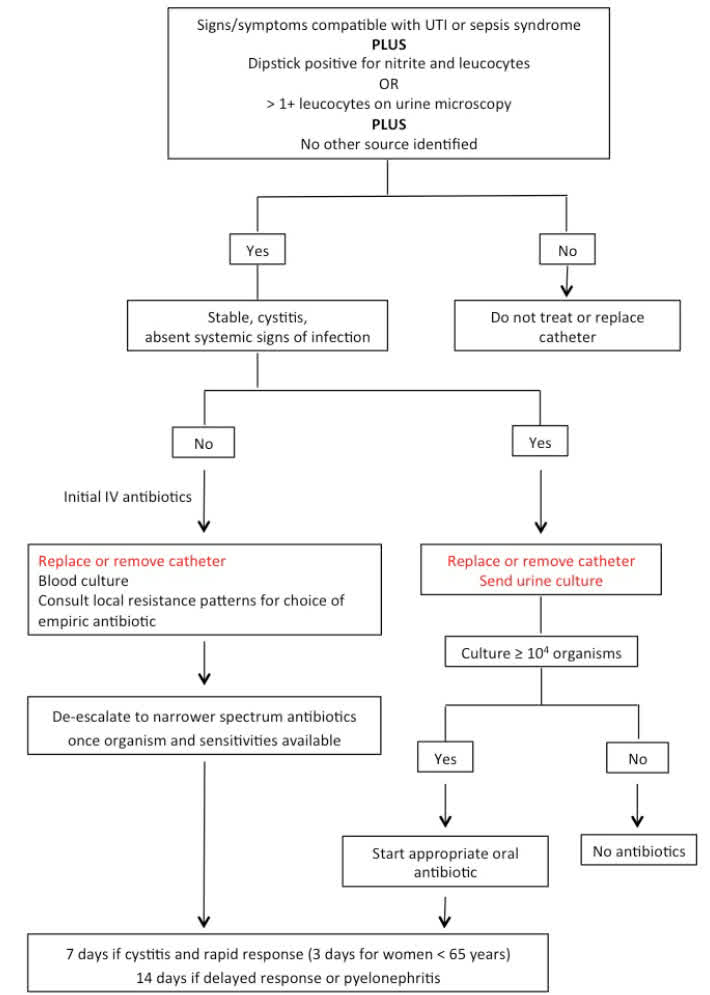
NB: non-specific signs of CA-UTI include fever or rigors, altered mental state and unexplained lethargy
UTI IN MEN
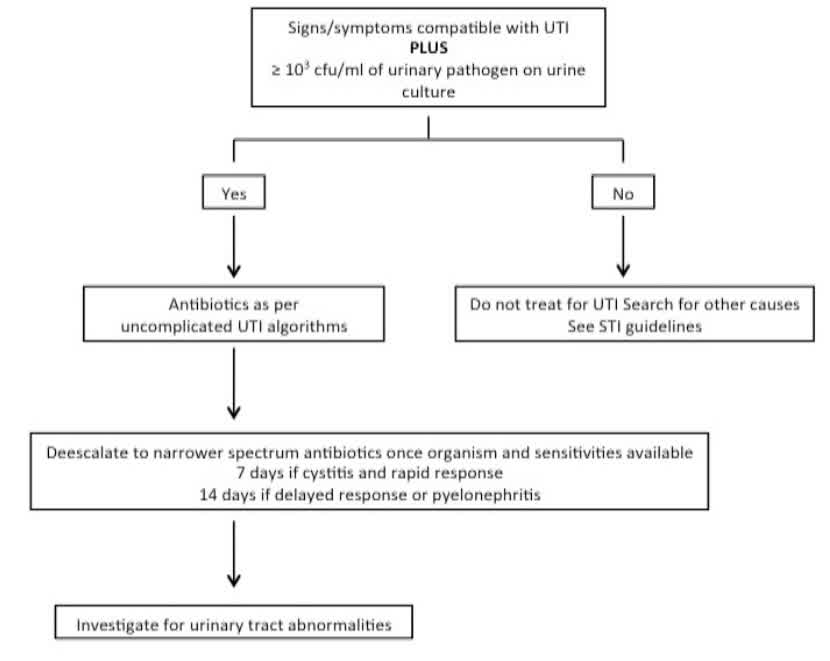
UTI IN PREGNANCY
i. Asymptomatic bacteriuria
Pregnant women with asymptomatic bacteriuria are at increased risk of developing pyelonephritis. Therefore all pregnant women should be screened for bacteriuria.
Diagnosis:
- Any culture showing ≥ 103 cfu/ml of a single organism (or any E. coli) in an asymptomatic pregnant woman
Management:
- Appropriate oral antibiotic for 5 days (see below)
- Perform follow-up urine culture to confirm sterility
ii. Cystitis and pyelonephritis
Diagnosis:
- As per uncomplicated UTI guidelines
- Always send urine culture
Management:
Ciprofloxacin is contraindicated in pregnancy. Therefore the following empiric antibiotics should be used, with de-‐escalation to narrower spectrum antibiotics once organism and sensitivities available:
- Cystitis or mild pyelonephritis:
- Coamoxiclav 1 g po 12-hourly before the 3rd trimester. Cefuroxime 250 mg po 8-hourly is preferred in the 3rd trimester due to decreased risk of necrotising enterocolitis
- Duration 5 days for cystitis, 14 days for pyelonephritis
- Severe pyelonephritis
- Treat as per uncomplicated UTI guidelines
For further information on the drugs listed in the above guidelines, click on the drug name and you will be directed to the EMGuidance drug monograph.
Amoxicillin/ Clavulanic acid
Ceftriaxone
Cefuroxime
Ciprofloxacin
Sulfamethoxazole/ Trimethoprim