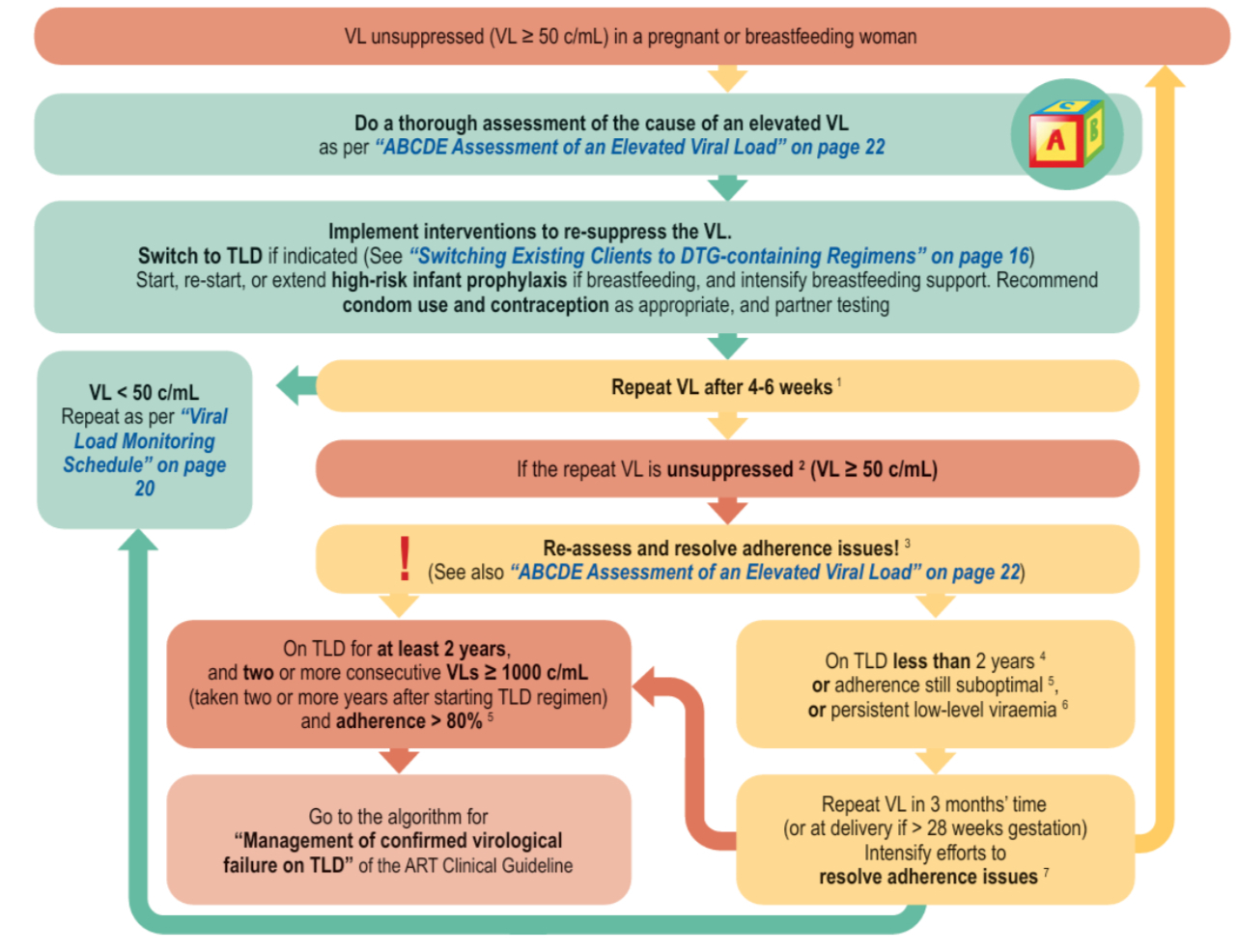
VL Non-Suppression Algorithm for Pregnant and Breastfeeding Women on TLD
Click on the image to enlarge. The shorter 4-week interval between doing the first VL above 50 and the repeat VL is preferred wherever possible. However, if the first elevated VL is the delivery-VL, the next visit may only occur at the 6-week post-natal visit. Due to their high genetic barrier, resistance to a first-line DTG-containing (TLD1) regimen is extremely rare. If other reasons for
Click on the image to enlarge.
- The shorter 4-week interval between doing the first VL above 50 and the repeat VL is preferred wherever possible. However, if the first elevated VL is the delivery-VL, the next visit may only occur at the 6-week post-natal visit.
- Due to their high genetic barrier, resistance to a first-line DTG-containing (TLD1) regimen is extremely rare. If other reasons for an unsuppressed VL have been addressed or excluded, e.g., drug interactions, and the client remains unsuppressed at their repeat VL, suboptimal adherence remains the most probable cause for non-suppression. The highest probability of improving adherence would be to remain on a once-daily, well-tolerated, fixed-dose combination regimen (TLD) while identifying and addressing the underlying root causes of non-adherence. Most (99,9%) of these clients will re-suppress on TLD if adherent!
- Repeat ABCDE assessment as outlined on page 23. Screen for and manage any vomiting in pregnancy. Check if the patient is crushing/breaking ARV tablets which can affect absorption. Remember to ask about treatment side-effects, the potential cost of transport or loss of income related to clinic visits, mental health conditions, and current or prior drug interactions. Current or previous drug interactions with rifampicin or the polyvalent cations may have resulted in the development of resistance.
- Drug interactions may also warrant an expert discussion and authorisation of a resistance test earlier than 2 years on the regimen. If necessary, discuss with an expert
- Objective measures of good adherence include at least one of:
a. Pharmacy refills > 80% in the last 6-12 months (if this is known)
b. Attendance of > 80% of scheduled clinic visits in the last 6-12 months (if this is known)
c. Detection of current antiretroviral drug/s in the client’s blood or urine, if available
Note: Self-reported adherence is not considered a reliable measure of good adherence! - Two or more consecutive VLs between 50 and 999 c/mL
- Women who fail to suppress on TLD1 despite intensive adherence support or who are failing TLD2 or 3rd line should be discussed with an expert/HIV hotline or referred. These women may be experiencing complex clinical and/or psychosocial challenges beyond the scope of this primary care guideline, and may require a tailored approach to maternal management, infant prophylaxis, and recommendations for breastfeeding.
BREASTFEEDING WITH AN ELEVATED VIRAL LOAD
It is recommended that women with an unsuppressed VL on TLD1 continue to breastfeed. Exclusive breastfeeding is strongly recommended if the baby is less than 6 months old.
Infant prophylaxis should be extended/restarted while a concerted effort is made to re-suppress the mother’s VL (see“Management of a High Maternal Viral Load after Delivery”).
Although breastfeeding in women with an unsuppressed VL on TLD2 or 3rd line ART is not recommended (particularly if the VL > 1000 c/mL) due to the risk of resistant HIV transmission, exclusively formula feeding may also pose risks to vulnerable children. These mother-baby pairs should be referred or discussed with a team of experts*, and social circumstances considered. If formula feeding is deemed the lesser risk, intensive formula feeding support and close monitoring by the therapeutic nutrition programme are recommended. Infant formula should be supplied by the DoH. See also “Stopping Breastfeeding”.
* A team of experts may include an HIV expert, paediatrician, dietician, social worker. If necessary, consult one of the “HIV Hotline”.
Abbreviations: ART, Antiretroviral therapy; DTG, Dolutegravir; LLV, Low-level viraemia; SOP; TL, Third-line; TLD, fixed-dose combination of tenofovir, lamivudine, DTG; VL, Viral load.
Click here for the ABCDE Assessment of an Elevated Viral Load.
Click here for the Switching Existing Clients to DTG-containing Regimens.
Click here for the Viral Load Monitoring Schedule.
South African National Department of Health, Guideline for Vertical Transmission Prevention of Communicable Infections, Version 2_August 2023