Western-Cape Provincial Periviability Criteria
Executive Summary Overview Background and Reasoning Definitions Principles GROUP 1: Neonatal interventions in Cape Town Hospitals housing NICU beds (TBH, GSH, MMH) GROUP 2: Neonatal interventions in Regional Hospitals (NSH, WRH, PRH, George Regional Hospital) GROUP 3: Neonatal interventions in District Hospitals Areas of inequity that require attention if these objectives
- Executive Summary
- Overview
- Background and Reasoning
- Definitions
- Principles
- GROUP 1: Neonatal interventions in Cape Town Hospitals housing NICU beds (TBH, GSH, MMH)
- GROUP 2: Neonatal interventions in Regional Hospitals (NSH, WRH, PRH, George Regional Hospital)
- GROUP 3: Neonatal interventions in District Hospitals
- Areas of inequity that require attention if these objectives are to be met
- Monitoring and Evaluation
- References
- Appendix 1
- Appendix 2: Foot length
- Appendix 3
Standard post-natal interventions for peri-viable preterm birth in extremely low birth weight infants in the Western Cape Province Department of Health
– Decision Support Framework
Executive Summary
1. This is framework aims to provide a clear approach to the management of babies born extremely prematurely or with an extremely low birth weight for those responsible for the implementation of the attached Standards.
2. The document includes:
- An overview of its essential content
- The background and reasoning for the standards
- The principles that guide the interventions including clinical accountability
- The intervention levels themselves and the decision-support system
3. In essence:
- All fetuses and babies in these peri-viable bands are considered for some form of active intervention, even it is a palliative intervention.
- In utero transfer for delivery of these tiny babies at the appropriate level should be undertaken where appropriate, feasible and safe.
- Babies born <27 weeks of gestation are provided a defined standard level of neonatal care after initial resuscitation, including palliative care where appropriate.
- Wherever they are born, babies with a birth weight equal to or over 1000g should have access to whichever level of care they require.
- For babies born between these two limits, there are 3 levels of facility care corresponding more or less to designated service levels in the province i.e. Levels 1-3, District/Regional/Central. Within these levels, there should be tiered intervention criteria based on birth weight and/or gestational age appropriate to each level of care.
- Individualised decision-making for some patients is necessary within this decision support framework, with an important role allocated to specialist staff in obstetrics and paediatrics/neonatology.
4. In implementing this set of standard care, each referral pathway needs to:
- Ensure that personnel are informed of this set of standards and are guided in their use.
- Ensure that all referral pathways are clear.
- Ensure clear communication channels between professional staff working in perinatal services across the facilities and levels of care in referral pathways.
- Clarify the decision support system for staff at each facility, with special emphasis on access to senior opinion and guidance to frontline staff for the care of individual pregnancies, labours and newborn babies.
5. For those districts or facilities where further development is required (identified in the Standards document) in order to increase appropriate access to these levels of care, plans need to be developed to meet these gaps. Support and guidance will be provided according to the Intervention Framework To Guide Perinatal Service Planning.
Overview
1. In 2014 the two Central Hospitals developed criteria for decision-making for the management of pregnancy, labour and neonates in the ‘peri-viable’ period. While not having exactly the same criteria, the two hospitals agreed that these criteria were justified in the Western Cape context. At a neonatal level, these criteria only applied to inborn babies at those hospitals. Criteria for the most sophisticated neonatal interventions required a gestation of 27 or 28 weeks and/or a birth weight of 750g or 800g.
2. The Perinatal Task Team situation analysis in 2015 showed variation in access to care for babies in this peri-viable period with varying actual in utero and neonatal interventions in services of equivalent designated level of care.
3. The criteria and notes drawn up here in consultations led by the Paediatric and Obstetric PCGCs have the following essential features:
- Improving equity of access to appropriate care for ELBW and sick newborn babies across the province.
- Provision of a set of principles to guide decision-making.
- In utero transfer for delivery of the ELBW baby at the appropriate level will be undertaken where appropriate, feasible and safe.
- Babies born <27 weeks of gestation will be given a defined standard level of neonatal care after initial resuscitation, including palliative care where appropriate.
- Wherever they are born, babies with a birth weight over 1000g will have access to whichever level of care they require.
- For babies between these two extremes, there will be 3 levels of ELBW facility care corresponding more or less to designated service levels in the province i.e. as defined in the 2009 Packages of Care. Within these levels, there will be tiered intervention criteria based on birth weight and/or gestational age appropriate to each level of care.
- Individualised decision-making for patients is necessary within this decision support framework, with an important role allocated to specialist staff in obstetrics and paediatrics/neonatology.
- Certain resource inequities (already brought out in the Situation Analysis) that make it impossible to implement some of these criteria evenly at all levels at present are highlighted for attention by the Department of Health.
Background and Reasoning
1. The following provincial perinatal service platform perspectives have been gained through the Situation Analysis conducted by the Perinatal Task Team:
- Variations in outcome and interventional approaches were identified.
- Inequities in access to appropriate care: some underlying factors are harder to mitigate (e.g. distance) than others.
2. There has been significant technological progress in recent years – improved prenatal preparation, surfactant, non-invasive respiratory support, transport, etc.
3. Neurological complications increase with decreasing gestational age at birth. There is a watershed of rapid increase in likelihood of significant neurological disabilities at 26-27 weeks gestation (GSH VON network data). There are limited services available for good quality of life for children with severe disabilities (Redfern et al 2016). There are poorer outcome in outborn babies <1000g compared with babies born within facilities that have a NICU (Riemer et al 2016).
4. Other significant co-morbidities and mortality in ELBW survivors of severe early disease demand careful consideration of the overall value of interventions in the peri-viable period: pneumonia and diarrhoea deaths in the first few months of life (Mathews et al 2015), significant learning difficulties, neurological and sensory impairments and decreased quality of life in later years.
5. Risk factors for prematurity and LBW related to upstream psychosocial aspects also impact postnatal outcomes – e.g. postnatal mortality due to pneumonia in premature infants post-discharge related to maternal psychosocial risk factors (Mathews et al 2015).
6. Resource implications – costs of NICU and conventional ventilation beds, Level 3 beds, CPAP beds and equipment; cost of surfactant; human (numbers and training); emergency transport, etc.
7. National considerations: the Western Cape Province Public Health Service provides services to newborns of greater intensity and quality compared with other provinces. Neonatal outcomes are already well ahead of the national average (DOH intervention Plan). Interventions in the Western Cape DOH do not equate to those offered in private practice for ELBW babies where babies at much lower gestational ages receive intensive care. An Essential package of Care is being developed to inform the National Health Insurance package. This will include services to babies previously accessing private services that have intervention levels at younger gestational ages than public services.
8. More detail of the situation analysis of neonatal services and approaches to mitigation of inequities can be found in the Intervention Framework To Guide Perinatal Service Planning (November 2016).
9. The ‘Accountability for Reasonableness’ (A4R) ethical process that guides the Western Cape Department of Health will be used to guide the final framework for this set of protocols. Of necessity this approach requires broader consultation to be undertaken.
Definitions
- CANPAP (NC O2) – Nasal catheter oxygen therapy
- HFHNCO2 – High flow humidified nasal cannula oxygen therapy
- CPAP – continuous positive airway pressure, usually administered via nasal prongs
- ELBW – extremely low birth weight
- GA – gestational age
- KMC – kangaroo mother care
- InSure - INtubation-SURfactant-Extubation
- IPPV – intermittent positive pressure ventilation given via endo-tracheal tube
- IVH – intraventricular haemorrhage
Principles
1. Gestational age considerations
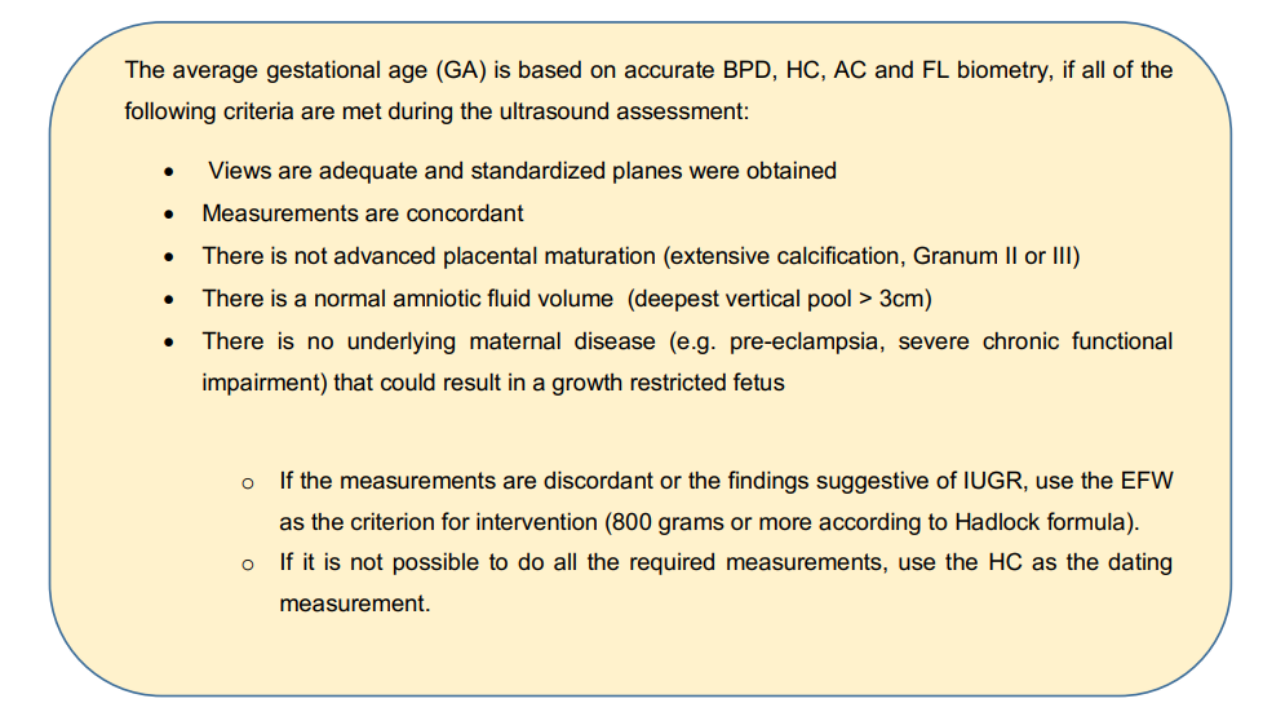
- Accurate antenatal gestation age assessment should be obtained wherever possible (see Appendix 1)
- Where gestational age (GA) of a fetus/newborn is not known by “sure dates”, or has not been determined by the criteria in Appendix 1, the birth weight and/or foot length (measured with a calliper (Appendix 2) – standards document compiled by Tygerberg Hospital Neonatal Department) will determine which initial respiratory support therapies can be given to the baby. The Ballard score will not be used for this purpose.
- The birth weights in this document correspond reasonably with the 10th birth weight percentile for gestation in each category, thus being inclusive of appropriately grown babies.
2. Inborn/Outborn/Antenatal care criteria
- Because the lack of antenatal care is associated with poorer outcomes, this should be used to determine access to more invasive and expensive modalities of therapy in the peri-viable period in some situations.
- Because transfer of the critically ill extremely preterm baby over long distances is associated with significant increase in risk and poorer outcomes for the baby in the Western Cape Province, for the foreseeable future, access to more invasive and expensive modalities of therapy in the peri-viable period will necessarily be limited for babies born outside facilities with a NICU. This includes all other facilities and home and ambulance births; hence the emphasis on pre-delivery transfers where possible.
3. Health service considerations
- Level 3 services are a common provincial resource; interventions provided at this level must take account of provincial needs.
- Level 2 services serve geographic population areas and require adequate and equitable resourcing to allow access to standardised care throughout the province.
- Variations in size, history and burden of disease have led to variable capabilities at district hospitals; these must be taken into account in implementing this package of interventions.
- Transport services must allow equitable access to referral care. However, the dispersed geography of the Western Cape will make it impossible to avoid some inequity of access to care for tiny babies in the Western Cape at this stage of its economic and infrastructure development. When possible, existing distance-related inequities should be mitigated by this policy.
4. Early intervention and assessment
- Initial resuscitation is an important part of the care of most of these babies. Supportive interventions set out in this document only take place after assessment and initial resuscitation and stabilisation efforts have been initiated where appropriate.
- The intensity of these resuscitation efforts must be adjusted according to available and evolving information on likely gestational age and birth weight, and the early response to these resuscitation efforts. Only babies with good heart rates, regular respiratory patterns, good cry and active movements will be considered for the respiratory and other life-saving support measures outlined in this document.
- All intervention criteria in this document assume that these initial assessments of the potential for a good survival and functional outcome for the baby have been undertaken.
- Senior staff support, responsibility and accountability are key factors in the decisions in the peri viable period.
- Sedation for InSure has dangers. It is only to be given where there are clear guidelines and assigned responsibility.
- Consideration must be given to pre-morbid conditions such as low Apgar scores, severe infection, IVH, congenital anomalies before initiating or continuing full respiratory support interventions.
- Palliative care is an active process involving counselling and care interventions that minimise suffering while not aiming to prolong life. It should include admission to a nursery where that is the best place for comfort care to be delivered.
- The interventions in this document apply to the first few days of the ELBW baby’s life. After that, discussion re transfers for specialised intervention (e.g. surgery) may take place.
5. Obstetric interventions
- Existing standards: (i) Harmonised obstetric criteria for timely medical referral to Level 3 services and (ii) Transport services are in place to guide and ensure equitable access of care for pregnant women across the province.
- Aim: that, where possible, all peri-viable preterm births (see Central Hospital consensus document re ante-natal assessment and interventions) in pregnant women who have had antenatal care will be born in a facility that houses a NICU (TBH, GSH, MMH and George Hospitals).
- Actions: Where
- delivery is likely to need to occur in the peri-viable period (e.g. uncontrolled hypertension) or
- preterm labour has begun during this period and cannot be suppressed, and
- labour is not too advanced.
after discussion with the receiving centre, early in-utero transfer of the fetus to a centre with a NICU should take place, wherever successful in-utero transfer is likely. Maternal antenatal steroids must be given pre-transfer in all in-utero infants according to the National Guideline on antenatal steroid use (Appendix 2).
- Whether elective, occurring in the referral hospital, or emergency transfer during labour, all such labours will be actively managed according to the guidelines set out in the Central Hospital Consensus document to optimise perinatal and long term outcomes for the baby.
- Women who are in preterm labour with a peri-viable fetus who have not had any antenatal care prior to labour or presentation with complications that demands urgent delivery will be managed on a case-by-case basis in consultation with the relevant referral hospital’s perinatal services (e.g. availability of high care or NICU bed, risk profile of the pregnancy, expected neonatal problem profile or fetal outcome).
6. Clinical accountability
- Unbooked status, low Apgar, severe congenital anomalies, suspected IVH and social factors that are likely to impact significantly on the neonatal problem profile, length of stay or outcome should be taken into account for the smallest peri-viable babies in the interests of equitable access for babies requiring Level 3 services from across the province.
- Consultant staff must take the lead in and be accountable for decision-making in these cases, aiming to reduce variability in interpretation across services. Decisions re initiation or continuation of the active management modalities set out in the document must be discussed with consultant staff and clinician teams as soon as possible. This applies at all levels of care.
GROUP 1: Neonatal interventions in Cape Town Hospitals housing NICU beds (TBH, GSH, MMH)
Category 1
<27 weeks1 OR ≥500g – <650g
IV/NG Fluids/feeds, warmth, antibiotics, regulated and monitored oxygen (incl. CANPAP/high flow if available), caffeine, KMC
NCO2/CANPAP, CPAP may be offered only in inborn, well-prepared infants in good condition at birth, depending on bed availability.
No surfactant
No routine blood gas monitoring or blood tests
Palliative measures if failing to respond
Category 2
≥27 weeks AND 650g – 799g
IV/NG Fluids/feeds, warmth, antibiotics, oxygen (incl. CANPAP/high flow if available), caffeine, KMC
CPAP, and InSure if indicated (not > 1 instillation)
Category 3
≥27 weeks AND ≥800g
IV/NG Fluids/feeds, warmth, antibiotics, oxygen (incl CANPAP/high flow if available), caffeine, KMC
InSure, any available respiratory intervention
Must be in an ICU bed if on IPPV or oscillation
Note 1: All babies in these categories will be inborn because outborn transfers to these units for these groups of babies from MOUs, district and regional hospitals will not occur. Outborn babies will be referred in from birth weight of 1000g if suitable for NICU care.
Note 2: Obstetric transfers to Level 3 (TBH and GSH) remain unchanged i.e. MMH NICU will provide at L2+ service to neonates born in the hospital’s L2 obstetric service.
Note 3: Tygerberg and Mowbray’s Regional L2 neonatal service and responsibilities remain in place.
1Foot length 53mm
GROUP 2: Neonatal interventions in Regional Hospitals (NSH, WRH, PRH, George Regional Hospital)
Category 1
<28 weeks2 OR ≥500g – <799g
Fluids/feeds, warmth, antibiotics, oxygen (incl CANPAP/ HFHNCO2 if available), caffeine, KMC
No InSure, No CPAP, No Blood gas monitoring, no blood tests
Access to High Care area only if bed not required for a larger more mature baby, with consultant assent
Palliative measures if failing to respond
Category 2
≥28 weeks AND >800g – <999g
Fluids/feeds, warmth, antibiotics, oxygen (incl CANPAP/ HFHNCO2 if available), caffeine, KMC
InSure (1 instillation) and CPAP (except George Hospital: 2 instillations)
No transfer to Level 3 service
Category 3
≥28 weeks AND/OR ≥1000g
Fluids/feeds, warmth, antibiotics, oxygen (incl. CANPAP/ HFHNCO2 if available), caffeine, KMC
InSure (up to 2 instillations), CPAP or IPPV if available (maximum 48 hours unless improving)
Transfer to Level 3 after 48 hours if not improving; transfer sooner if ventilatory requirement is rapidly rising
Must be in a High Care bed if on CPAP or IPPV
Must be in an ICU bed if on IPPV or oscillation (George hospital only)
Note 1: outborn ELBW babies < 1000g will be managed as in the Category 1 above
Note 2: Paarl Regional Hospital currently does not have capacity to provide short term IPPV for babies. This mainly relates to staffing numbers and budget. This needs to be addressed to provide equity for babies from West Coast and Cape Winelands West as well as taking pressure of Tygerberg Hospital.
Note 3: See note below re Group 3 in West Coast and Cape Winelands West districts in relation to Paarl Regional Hospital neonatal services
Note 4: Currently George Regional Hospital does not have capacity to use these criteria for babies between 800g and 999g. It will work according to the current guidelines developed by Dr I Els. Population and distance criteria require that the province improves access to level 2 and some Level 3 care for the Eden and Central Karoo districts to promote equity. This is likely to be largely delivered at George Regional Hospital.
2Foot length = 55mm
GROUP 3: Neonatal interventions in District Hospitals
Category 1
<28 weeks3 OR ≥500g – <1000g
Fluids/feeds, warmth, antibiotics, oxygen (incl CANPAP/ HFHNCO2 if available), caffeine, KMC
No InSure, No CPAP, No Blood gas monitoring, no blood tests
Palliative measures if failing to respond
Note: Large Metro District Hospitals that have Level 2 functionality i.e. CPAP beds and second level (Paediatrician/experienced Senior Family Physician) cover, may initiate CPAP and InSure (1 instillation) on local consultant advice in babies ≥28 weeks and ≥900 - 1000g. Transfer to Regional/L3 service for IPPV may be considered on a consultant to consultant basis.
Category 2
≥28 weeks AND/OR ≥1000g
All cases: Fluids/feeds, warmth, antibiotics, oxygen (incl. CANPAP/high flow if available), caffeine, KMC
Babies requiring higher levels of respiratory support:
If no CPAP or InSure available - Discuss with Level 2+ or Regional hospital
If Emergency CPAP available – Put on CPAP and Discuss with Level 2
If InSure and CPAP beds available – InSure and CPAP. Discuss with Level 2+ or Regional Hospital if not improving within 48 hours or sooner if deteriorating
Level 2/ Regional Hospital will negotiate transfer to Level 3 NICU if required
Note 1: There is a large range of size and capability of district hospitals. Each GSA needs to identify what levels of care are reasonable at each hospital or group of hospitals (e.g. a CPAP hub), under the guidance of the regional paediatric service and district paediatricians.
Note 2: Many district hospitals in the West Coast and Cape Winelands West districts are considered to be unable to render adequate basic care for ELBW babies; such babies are usually transferred to Paarl Regional Hospital. This inequitable situation needs to be investigated and remedied. For the present, transfers will continue but the intervention level should be as per district criteria, with the inclusion of CPAP if beds and equipment allow.
3Foot length = 55mm
Areas of inequity that require attention if these objectives are to be met
1. George Regional Hospital and its drainage area
Current facilities for sick newborns at George Regional Hospital have been outstripped by the population growth such that it cannot accommodate in utero transfers of babies likely to be 1000g or less. The distance from Level 3 services in Cape Town precludes safe transfer of babies requiring Level 3 care. For equity purpose, therefore, NICU services at George Hospital need strengthening to accommodate the neonatal requirements of its drainage area.
2. Paarl Regional Hospital
Paarl Regional Hospital does not have neonatal High Care facilities sufficient to provide short term IPPV, a Level 2 requirement. This puts unnecessary pressure on Tygerberg NICU. Consequently beds that should be used for Level 3 neonatal care are denied to babies who require it.
3. West Coast district
The capacity of small district hospitals in this region to manage low birth weight babies who require District Hospital Category 1 care requires review. All such babies are currently referred to Paarl Regional Hospital which rather needs to concentrate on babies in Categories 2 and 3 (see point 2 above).
Monitoring and Evaluation
To avoid increasing data workload, the following monitoring measures are proposed:
- Outcomes
- Short term Survival of liveborn babies 500 – 999g by region – PPIP
- Short term Survival of babies 800 – 1000g/≥27 weeks gestation in Group 1 and 2 hospitals – existing in-house neonatal data systems e.g. VON, Paarl system.
- Deaths post-discharge of babies 800 – 1000g – Child PIP, Child Death review
- Morbidity related to HIE
- Resource utilisation
- Group 1: NICU occupancies – Clinicom/Sinjani (as identified in Situation Analysis)
- Group 2: High care occupancies – Clinicom/Sinjani (as identified in Situation Analysis)
- Groups 1 & 2: Overall bed occupancy – Clinicom/Sinjani
Evaluation: where possible, compare data from previous periods with post-implementation data.
References:
- Consensus statements on the management of peri-viable birth Tygerberg Hospital and GSH (2014)
- GSH VON report of complications by gestation and birth weight 2015
- Redfern A, Westwood A, Donald K. Children with disabling chronic conditions in the Western health subdistrict of Cape Town, South Africa: Estimating numbers and service gaps. S Afr Med J 2016; 106: 302-306
- Riemer et al. Retrospective review of inborn and outborn babies in GSH Nursery (Abstract SAPA conference 2016)
- Mathews et al. Lessons learnt from the Child Death Review Pilot. http://www.ci.org.za/depts/ci/pubs/pdf/workingdiscussionpapers/2015/Every-child counts_July2015.pdf
- Draft Integrated Plan for Reducing Mortality in Mothers, Newborns and Under-fives In South Africa. DOH August 2016
Appendix 1
Appendix 2: Foot length
- This should be used to estimate gestational age in ELBW babies where early ultrasound (<24 weeks) or certain menstrual dates are not available
- Commercial plastic Vernier sliding callipers are recommended for accurate foot length measurement
- Support the foot between the forefinger and the thumb
- Do the measurement from the mid-point of the heel to the tip of the longest toe
- Repeat until the measurements are the same (2-3 times)
Appendix 3:
Excerpt from Antenatal corticosteroid therapy at district level for reduction of neonatal morbidity and mortality (National Department of Health).
The WHO Recommendations on Interventions to Improve Preterm Birth Outcomes states that antenatal corticosteroids to enhance lung maturity should only be used where the following conditions can be met:
- The ability to accurately assess gestational age
- Preterm birth is considered to be imminent
- No clinical evidence of maternal infection
- Adequate childbirth care is available (including the capacity to recognize and safely manage preterm labour and birth)
- Adequate care is available for preterm new-borns (e.g. resuscitation, thermal care Kangaroo Mother Care, adequate feeding support, treatment of infection, safe oxygen use)