GuidelinesOther guideline
Anaphylaxis/Anaphylactic Reactions
Paediatric Anaphylaxis/Anaphylactic Reactions
Symptoms and signs in allergic reactions vs anaphylaxis
Symptoms and signs in allergic reactions vs Anaphylaxis
| Symptoms | Signs | |
| Allergic Reactions | Burning sensation in mouth, itching of lips, mouth and throat, coughing, feeling of warmth, nausea, abdominal pain, loose bowel motions, sweating, dizziness, syncope, paraesthesia | Urticarial rash, Swelling of eyes, lips and tongue (angioedema), conjunctivitis, flushing |
| Anaphylaxis | Difficulty breathing, noisy breathing, dyspnoea, cyanosis, agitation, collapse. | Bronchospasm, wheeze, stridor, tachycardia with hypotension and shock, respiratory arrest or cardiac arrest |
ACUTE MANAGEMENT
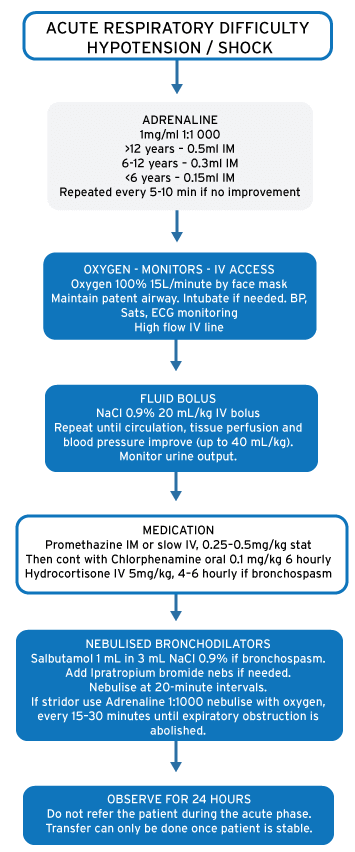
- Oxygen 100%, at 1–2L/minute by nasal prong. In severe anaphylaxis: Oxygen 100% 15L/minute by face mask. Secure an open airway. If necessary, bag via mask or intubate.
- Epinephrine (adrenaline) 1:1 000 IM, 0.01mL/kg (10mcg/kg). Maximum dose: 0.5 mL. Can be repeated every 5 minutes, if necessary. Do not administer IV unless there is failure to respond to several doses of IM.
- Sodium chloride 0.9%, IV, 20 mL/kg as a bolus. Repeat if necessary until circulation, tissue perfusion and blood pressure improve (up to 40 mL/kg). Monitor urine output.
- Promethazine, IV/IM, 0.25–0.5 mg/kg/dose. Then continue with Chlorphenamine, oral, 0.1 mg/kg/dose 6 hourly for 24–48 hours, if necessary.
- Salbutamol nebulised, 1 mL salbutamol solution in 3 mL sodium chloride 0.9% if associated bronchospasm. Nebulise at 20-minute intervals. Add Ipratropium bromide nebs if needed.
- Hydrocortisone, IV 5 mg/kg, 4–6 hourly for 12–24 hours. Steroids are adjunctive therapy and are not first line treatment and should never be the sole treatment of anaphylaxis.
- If associated stridor: Epinephrine (adrenaline), 1:1000, nebulise with oxygen, every 15–30 minutes until expiratory obstruction is abolished. (1 mL epinephrine 1:1 000 diluted in 1 mL sodium chloride 0.9%)
- Observe for 24 hours. Do not refer the patient during the acute phase. Transfer can only be done once patient is stable.
GENERAL PREVENTATIVE MEASURES
- Obtain a history of allergies/anaphylaxis on all patients before administering medication/immunisation. Identify offending agent and avoid further exposure.
- Educate patient and caregiver on allergy and anaphylaxis.
- Apply for Medicalert bracelet at www.medicalert.co.za.
- Train patients to self-administer epinephrine pre-filled auto injecting device. Specialist initiated for patients who have clear documented anaphylactic reactions. Patients must be informed of the shelf life of epinephrine and when they must come in to get a replacement for these.
- Refer bee sting anaphylaxis for desensitisation at TBH Allergy clinic (021)938-4539.