Cardiopulmonary Arrest, Children
Description General Measures Emergency Treatment Immediate Emergency Medicine Treatment Additional Guidance Referral ICD-10 code: I46.0/I46.9 Figure 21.3 Advanced cardiac arrest algorithm for children Click on image to enlarge DESCRIPTION Cardiopulmonary arrest is the cessation of respiration or cardiac function and in children is usually a pre-terminal event as a result of a critical illn
Immediate Emergency Medicine Treatment
ICD-10 code: I46.0/I46.9
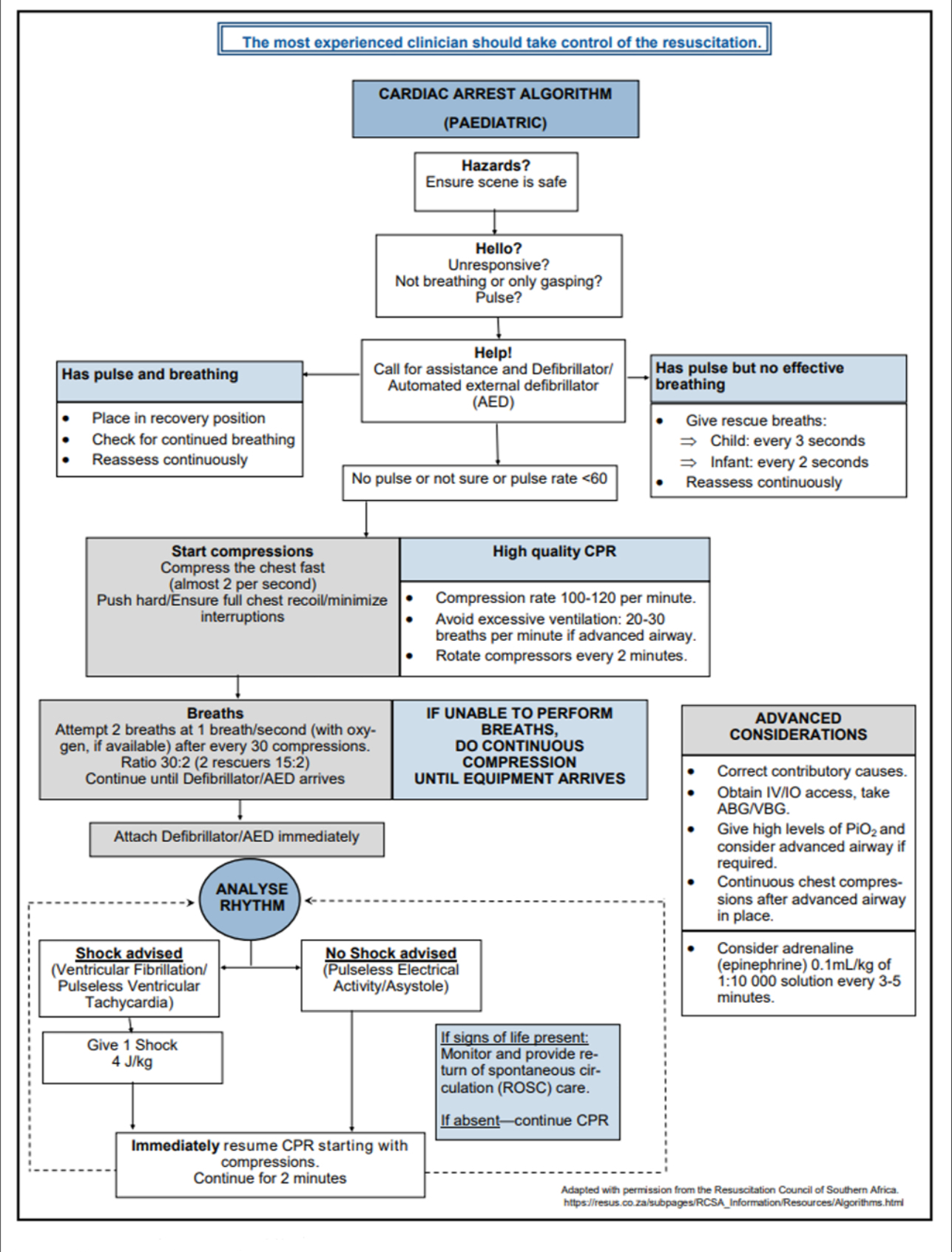
Figure 21.3 Advanced cardiac arrest algorithm for children
Click on image to enlarge
DESCRIPTION
Cardiopulmonary arrest is the cessation of respiration or cardiac function and in children is usually a pre-terminal event as a result of a critical illness.
The most effective treatment of cardiorespiratory arrest in children is the prevention of the arrest by early recognition and management of severe disease. Bradycardia in children is a pre-terminal event and needs to be treated with resuscitation.
Cardiorespiratory arrest in children usually follows poor respiration, poor circulation or poor respiratory effort (e.g. prolonged seizures, poisoning, neuromuscular weakness etc.).
The following table outlines signs of serious disease/impending cardiorespiratory failure in a child. These are an indication that urgent effective management is needed.
|
Neurological |
Respiratory |
Circulatory |
|
| Signs of impending cardiorespiratory failure/ severe disease |
Decreased level of consciousness or extreme weakness | Increased respiratory rate: > 60 breaths/minute |
Increased heart rate: > 160 beats/min in infants > 120 beats/min in children |
| Abnormal posture | Marked chest indrawing | Decreased pulse volume | |
| Pupils – unequal or abnormal size | Grunting | Capillary refill time > 3 seconds | |
| Presence of convulsions | Flaring nostrils, gasping, shallow/irregular breathing | Poor colour: bluish, grey or marked pallor |
GENERAL MEASURES
- Diagnose the need for resuscitation rapidly.
- Make a note of the time of starting.
- Place the patient on a firm flat surface and commence resuscitation immediately.
- Document timings of interventions, medication and any response to these. (Ideally, during resuscitation, one staff member should act as a ‘scribe’).
- Collect all ampoules used and total them at the end.
EMERGENCY TREATMENT
Hazards, Hello, Help
- Assess for any hazards and remove. Make use of personal protective equipment i.e. gloves, masks.
- Call for skilled help and an automated external defibrillator (AED) or defibrillator.
Cardiopulmonary resuscitation (CPR)
Circulation
- Check for signs of life and presence of central pulse for 5–10 seconds. In younger children (infants) check brachial or femoral pulse, in older children use femoral or carotid pulse.
- If there is no pulse (or pulse < 60 beats/minute) with no signs of life, give 30 chest compressions at a rate of 100-120 compressions/minute.
- Compress over lower half of sternum and compress chest by approximately 1/3 of the anteroposterior diameter of the chest.
- Allow chest to fully recoil before next compression.
- Minimise interruptions in compressions
Airway
- Manually remove obvious visible obstruction from the mouth.
CAUTION
Do not use blind finger sweeps of the mouth or posterior pharynx as this can impact any obstruction further down the airway.
- In neonates and infants: position the head in neutral position. In children: position in the sniffing position.
- Lift the chin forward with the fingers under the bony tip of the jaw.
Breathing
- If there is no breathing, give breaths:
- preferably with bag-valve-mask resuscitator
or - mouth-to-nose (covering child’s mouth AND nose with your mouth)
or - mouth-to-mouth (occluding nose by pinching child’s nostrils)
- preferably with bag-valve-mask resuscitator
- Give 2 effective breaths at one breath/second.
- Breaths must produce visible chest rise.
Then
- If 2 rescuers are present, carry out cycles of 15 chest compressions followed by 2 breaths (15:2).
- If only 1 rescuer present, carry out cycles of 30 compressions to 2 breaths (30:2).
- Review after 2 minutes or 5 cycles - if pulse is not palpable continue CPR sequence until help arrives.
- Oxygenate with 100% oxygen, if available.
Keep patient covered and warm while resuscitating (although the patient should be fully exposed for short periods during examination).
IMMEDIATE EMERGENCY MEDICINE TREATMENT
- Estimate the weight of the child by using a paediatric resuscitation tape (PAWPER tape or Broselow tape). If not available, use the following calculation:
Weight [kg] = (Age [yrs] + 4) X 2
- If still no pulse or signs of life after cardiac compressions and ventilations:
- Adrenaline (epinephrine), IV, 0.1 mL/kg of 1:10 000 solution.
- To make an 1:10 000 adrenaline (epinephrine) solution, dilute 1 mL ampoule of adrenaline (epinephrine) (1:1000) with 9 mL of sodium chloride 0.9% to give 10 mL of 1:10 000 solution.
- Administer dose according to table below.
- If no IV line is available, the same dose may be given IO.
|
Weight |
Dose |
Volume of diluted solution |
Age |
|
>2.5–7 kg |
0.05 mg |
0.5 mL |
Birth–6 months |
|
>7–11 kg |
0.1 mg |
1 mL |
>6–18 months |
|
>11–17.5 kg |
0.15 mg |
1.5 mL |
>18 months–5 years |
|
>17.5–25 kg |
0.2 mg |
2 mL |
>5–7 years |
|
>25–35 kg |
0.3 mg |
3 mL |
>7–11 years |
|
>35–55 kg |
0.5 mg |
5 mL |
>11–15 years |
Treat hypoglycaemia if present
- Dextrose 10%, solution, IV, 2–5 mL/kg.
- To make 20 mL of 10% dextrose solution: draw 4 mL of 50% dextrose using 20 mL syringe and add 16 mL of sodium chloride 0.9% or water for injection.
- After dextrose bolus, commence dextrose 5-10% infusion, 3-5 mL/kg/hour to prevent blood glucose dropping again.
- Re-check the blood glucose after 15 minutes: if blood sugar is still low: give further bolus of dextrose 10%, IV, 2 mL/kg and continue dextrose infusion.
- Assess continuously until the patient shows signs of recovery.
ADDITIONAL GUIDANCE
Consider stopping resuscitation attempts and pronouncing death if:
- No signs of life are present after 30 minutes of active resuscitation or in the absence of the factors for prolonging resuscitation as listed below. A doctor must be called before resuscitation is stopped. If no doctor on site, telephonic consultation should take place.
Consider carrying on for longer especially with
- hypothermia and drowning
- poisoning or medicine overdose
- neurotoxic envenomation (e.g. black and green mamba or Cape cobra snakebite) – see: Snakebites
This decision should take into consideration the potential risk that CPR poses to the rescuer e.g. infectious diseases.
REFERRAL
- All patients: transfer with supportive care and accompanying skilled worker until taken over by doctor at receiving institution.
- For guidance on neonatal resuscitation, See: Neonatal Resuscitation.
Click here for the NEMLC Recommendations for medicine amendments (2020-4 review cycle).
Standard Treatment Guidelines and Essential Medicines List for South Africa, Primary Healthcare, 2020-4_Version 1.1_October 2024
Chapter 21: Emergencies and Injuries