Management of RR-TB in Children Under 15 Years of Age
Introductory remarks Principles of RR-TB treatment in children under 15 years of age Approach to treatment of RR-TB in children under 15 years of age Sample individualized regimens for children under the age of 15 years ART regimen modification for children aged one month to <10 years, and >3 to <30 kg, living with HIV and on ART at RR-TB treatment initiation Weight-based dosing recommen
Principles of RR-TB treatment in children under 15 years of age
Approach to treatment of RR-TB in children under 15 years of age
Sample individualized regimens for children under the age of 15 years
Weight-based dosing recommendations for children and adolescents aged <15 years and weighing <30 kg
Introductory remarks
In March 2022, the World Health Organization (WHO) issued updated guidelines for management of tuberculosis in children and young adolescents, which recommend that delamanid and bedaquiline can be used in all age groups, along with updated dosing guidance for all TB drugs [13]. Therefore, previous age restrictions on use of these medications in children are no longer relevant.
The WHO-recommended 6-month regimens, BPaL and BPaLM, only apply to non-pregnant persons aged 15 years and older, as pretomanid safety has not been established during pregnancy or in children. However, most children with RR-TB do not require a long 18-month treatment regimen to achieve cure of the disease.
Based on the results of the SHINE trial, which focused on treatment shortening for drugsusceptible (DS)-TB in children with non-severe disease [14], the WHO now recommends a total duration of only 4 months of treatment in children with smear negative, non-severe DS-TB. A similar approach to shorter treatment has been adopted by clinicians experienced in the management of paediatric RR-TB, and children with non-severe RR-TB disease can be successfully treated with a shorter duration of treatment than is usually recommended for adults. However, close monitoring for recurrent disease, for at least 12 months following completion of treatment, is considered essential for these children.
Local availability of paediatric formulations of TB drugs also determine which regimens are feasible in South Africa, particularly among young children for whom the adult drug formulations are typically poorly tolerated and difficult to administer. Wherever possible, paediatric formulations should be considered for young children and infants or for those who struggle to swallow adult formulation tablets. Pediatric formulations including delamanid 25 mg dispersible tablet, levofloxacin 100 mg dispersible tablet, bedaquiline 20 mg dispersible tablet, clofazimine 50 mg dispersible tablet are available at selected sites in Eastern Cape and Kwazulu-Natal through a donation programme. These will be scaled up in near future. There are new concerns regarding the sustainability of the supply of terizidone (TRD), which is often still used in paediatric RR-TB regimens.
Therefore, it is important to emphasize the general principles of RR-TB treatment and regimen design in this age group, as there is no standardized treatment regimen for all children under 15 years of age. Composition and duration of treatment regimens may vary between individual children and is based on resistance profile of the organism as well as site and severity of the RR-TB disease.
The following recommendations for treatment of RR-TB in children under 15 years of age follows the approach outlined in the Sentinel Guide for Management of MDR-TB in Children [15], considering available programmatic paediatric data, extrapolated efficacy data from adult clinical trials, expert paediatric opinion and the latest WHO recommendations.
Principles of RR-TB treatment in children under 15 years of age
The general approach to paediatric RR-TB regimen design is the same for children of all ages (0- 14 years). The following principles of treatment are recommended:
- In designing treatment regimens for children, the following factors must be considered:
- RR-TB regimen composition is based on the current WHO drug grouping (see: Diagnosis of RR-TB-Key points to consider in RR-TB diagnosis in children). The regimen should include at least 4 drugs considered to be effective, with possible addition of a 5th drug if needed (severe disease, site of infection, or only ≤ 1 group A drug in regimen). Priority must be given to WHO Group A & B drugs and delamanid; using more than five of these drugs in cases of MDR/pre-XDR-TB may add to the toxicity profile of the regimen without necessarily improving treatment efficacy.
- All-oral regimens must be prioritised (except for rescue regimens where options are limited, and injectable agents are available and likely to be effective).
- Disease severity, i.e., severe versus non-severe disease (based on definitions from the SHINE trial and the WHO 2022 definition for children < 15 years, see Table 3.2.1 below) – children with severe disease may require five drugs in their regimen initially.
- Site of disease – children with more extensive disease (particularly CNS, miliary, bone or pericardial disease) are likely to require five drugs in their regimen. Treatment of RR-TB meningitis should be guided by the medicines’ ability to cross the blood-brain barrier.
- Drug resistance profile – treatment should be based on the DST pattern of the M. tuberculosis strain from the most likely source case if the child does not have an M. tuberculosis isolate of his/her own with DST results. Following up on all DST results for samples from the child and the source patient is therefore essential (with special consideration for checking resistance to the fluoroquinolones, BDQ, CFZ, and LZD)
- Toxicity and tolerability of drugs, and feasibility of adverse effect monitoring – specific medicines, e.g. LZD, may not be a feasible option for some children in view of the considerable risk of toxicity and stringent monitoring requirements (e.g., frequent blood draws to check full blood count (FBC) and differential white cell count) which may be challenging for some children and their families.
- Availability of paediatric formulations – some medicines (e.g., 100 mg CFZ capsules) cannot be easily administered to young children and may have to be substituted with other effective medicines.
- Drug dosing is based on the child’s weight (and age in infants), in accordance with the 2022 WHO RR-TB treatment guidelines [13] – see Annexure 1 for drug dosing in children weighing under 30 kg and for those weighing over 30 kg. Doses of drugs must be modified as children gain or lose weight over the weight band thresholds.
- Child-friendly formulations of TB medications should be used whenever possible, if acceptable to the child and caregiver. If paediatric formulations are not available, then extemporaneous preparations may be required. These can be prepared daily by cutting or crushing the tablets, and mixing with water, pap, yoghurt or milk. This should be done in consultation with a pharmacist or a pharmacist’s assistant.
- Persons at primary healthcare facilities dispensing the TB medicines to the child/caregiver for administration at home should carefully check the doses of each medicine and that the correct formulation is used, especially if there is more than formulation for a specific medicine (e.g., a 100mg dispersible levofloxacin tablet is different in mg strength from the 250 mg adult levofloxacin formulation).
- Adherence support for the child and the caregivers is essential to ensure optimal outcomes in children. Because preparation and administration of the medications used to treat RR-TB can be complicated, intensive support should be provided to the family throughout treatment.
- Very young children (under the age of 5 years) with any form of RR-TB disease should be treated under the guidance of a clinician with experience in the management of paediatric RR-TB. This also applies for children with XDR-TB (i.e., MDR plus resistance to fluoroquinolone and resistance to bedaquiline and/or linezolid), as individualized longer regimens and in-patient management may be necessary.
- Treatment duration in children is usually based on site and severity of disease (see Table 3.2.1 below), as well as extent of drug resistance. Good outcomes have been reported among adults following treatment with 3 or 4 drugs for 6 months (BPaL and BPaLM). Results from the SHINE trial [14] indicate that children with non-severe DS-TB disease can be successfully treated with a shorter (4-month) duration with effective drugs. Therefore, children with non-severe RR-TB disease are also likely to be successfully treated with shorter (6-month) regimens containing at least 4 effective drugs; those with more severe disease are likely to require longer treatment for 9 or 12 months (see Figure 3.1). Clinicians may also extend treatment for individuals in cases of slow or inadequate clinical, radiological and/or microbiological treatment response. There is no specified intensive or continuation phase for paediatric RR-TB regimens and most drugs should be continued throughout treatment, if possible, unless limited by toxicity or intolerance. Bedaquiline and delamanid are mostly used for 6 months only but can be extended to 9 months in consultation with an expert/specialist. Linezolid is often only tolerated for up to 2 months; however, some children may benefit from linezolid for the full duration of treatment if tolerated.
Table 3.2.1: Severe versus non-severe disease in children < 15 years
| Severe TB disease in children < 15 years | Non-severe TB disease in children < 15 years |
| - CXR: bilateral disease (consolidation, infiltrates), or presence of cavities. - Mediastinal lymph nodes causing airways compression. - Extrapulmonary forms of disease other than peripheral LNs or simple pleural effusion. |
- Peripheral lymphadenopathy. - CXR: unilateral disease (consolidation, infiltrates in < 1 lobe in total) without cavities. - Small/simple pleural effusions. - Mediastinal lymph nodes without airways compression. |
Approach to treatment of RR-TB in children under 15 years of age
Figure 3.1 summarizes the approach to treatment of RR-TB in children < 15 years of age. The proposed drug combinations in this figure are examples for common scenarios, but the regimens have to be individualized based on the factors discussed in Principles of RR-TB treatment in children under 15 years of age.
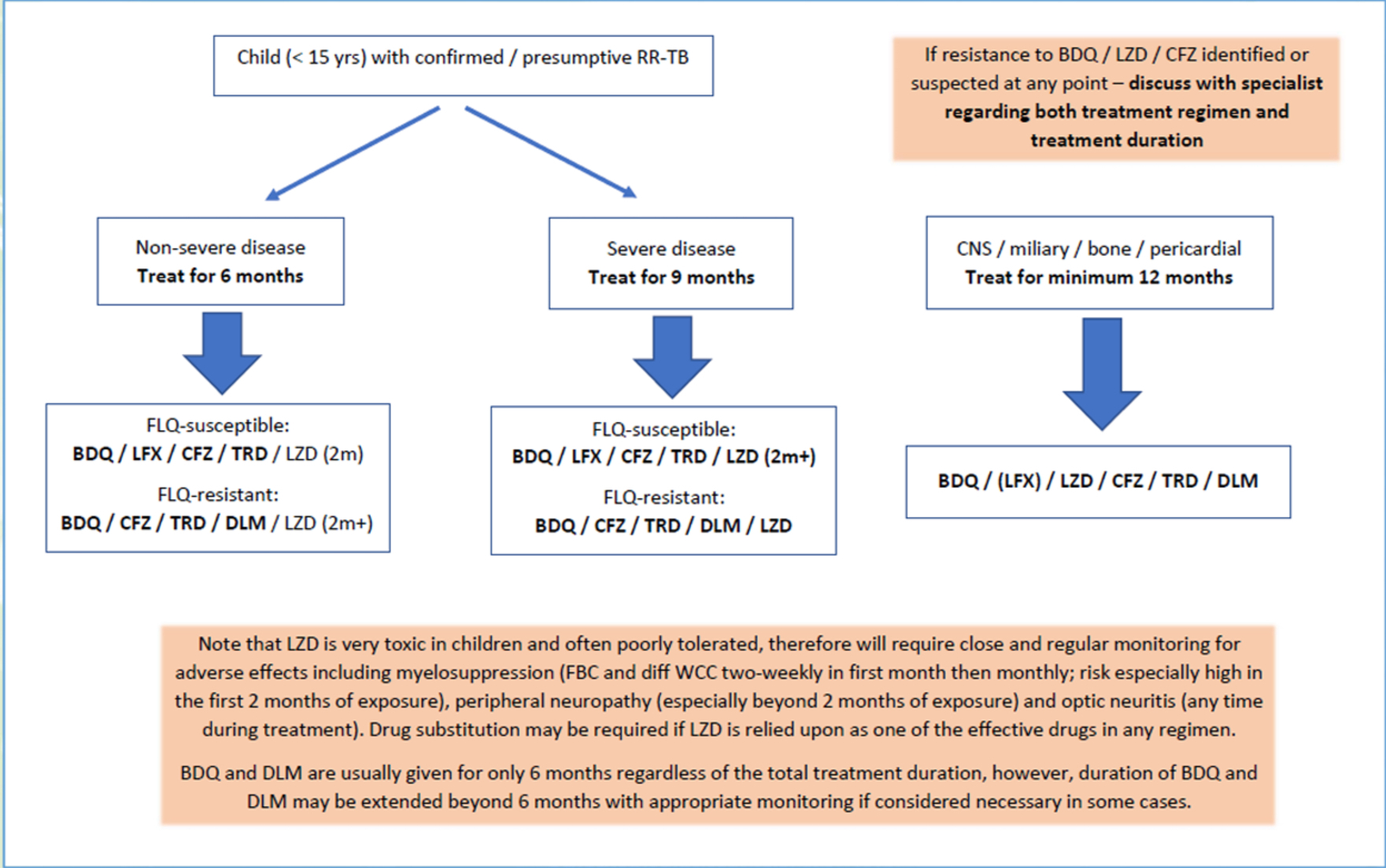
Figure 3.1: Approach to treatment of RR-TB in children < 15 years
Click on the image to enlarge.
- DLM may be used in replacement of terizidone.
- Ethionamide to replace TRD in the long regimen.
Sample individualized regimens for children under the age of 15 years
Table 3.4.1 below provides some examples of individualized regimens that would be appropriate in various situations based on drug susceptibility test pattern and site / severity of disease. Clinicians with limited experience in the management of paediatric RR-TB are advised to discuss cases with more experienced clinicians. All cases of RR-TB with confirmed or presumed resistance to BDQ / LZD / CFZ should be referred to a paediatric DR-TB expert or paediatric infectious diseases’ expert or to the PCAC/NCAC for guidance on optimal treatment.
Table 3.4.1: Examples of individualized regimens for children < 15 years
| DRUG SUSCEPTIBILITY PATTERN | SEVERITY OF DISEASE | SUGGESTED REGIMEN AND DURATION | COMMENTS |
| RR-TB that is NOT fluoroquinolone-resistant and NOT central nervous system disease, osteoarticular or spinal TB | Non-severe | BDQ – LFX – CFZ – (TRD or DLM) for 6 months; and +/- LZD for first 2 months* | If INH susceptible on pDST, hdINH may be considered instead of DLM or TRD# |
| Severe | BDQ – LFX – LZD** – CFZ – (TRD or DLM) for 9 months | If LZD withdrawn in first 2 months, consult with expert and potentially replace LZD with another effective drug (DLM, TRD, PAS, hdINH or ETO) | |
| RR-TB that is resistant to fluoroquinolones | Non-severe | BDQ – LZD** – CFZ – TRD – DLM for 6 months |
|
| Severe | BDQ – LZD** – CFZ – TRD – DLM for 9 months |
Use PAS if TRD is unavailable. If LZD is withdrawn in first 2 months, consult with expert and replace LZD with another effective drug (PAS, hdINH or ETO) | |
| RR-TB central nervous system disease or spinal TB | Severe | BDQ – [LFX] – LZD** – CFZ – TRD – DLM for 12-18 months | Use LFX if strain is susceptible. Consider carbapenems or ETO / hdINH in CNS and miliary disease |
| RR-TB with confirmed or probable resistance to BDQ / CFZ / LZD | Severe | Individualized rescue regimen required | Refer and/or obtain expert guidance |
* Use LZD for up to 2 months if tolerated and feasible to monitor – if not tolerated for first 2 months, no need to substitute provided the child can tolerate 4 other effective drugs.
** Use LZD for as long as tolerated and feasible – consider the preferences of caregivers and ability of staff to adequately monitor for LZD adverse effects in children, particularly bone marrow suppression (Hb < 8 g/dL, neutrophils ˂ 0.75 x 10⁹ /L and/or platelets ˂50 x 109 /L) which may require frequent blood draws, and the ability to monitor for peripheral neuropathy/optic neuritis.
# TRD has been shown to reduce plasma concentrations of INH; concomitant use of these drugs should be avoided where possible
BDQ = bedaquiline; LZD = linezolid; LFX = levofloxacin; CFZ = clofazimine; TRD = terizidone; DLM = delamanid; hdINH = high dose isoniazid; ETO = ethionamide; PAS = para-aminosalicylic acid
ART regimen modification for children aged one month to <10 years, and >3 to <30 kg, living with HIV and on ART at RR-TB treatment initiation
Refer to annexure 2: 2023 ART guidelines of the National Department of Health [16].
Weight-based dosing recommendations for children and adolescents aged <15 years and weighing <30 kg –
See annexure 1: Weight-based dosing of medicines used in multidrug-resistant TB regimens, adults and childrena (World Health Organisation 2022 operational handbook) [17].
National Department of Health Clinical Management of Rifampicin-Resistant Tuberculosis, September 2023
Management of RR-TB in Children Under 15 Years of Age