Plasma Components and Derivatives
SANBS Clinical Guideline, 6th Edition, 2023
General precautions for the use of plasma products
Plasma-derived medicinal products
Overview
Plasma products are diverse and comprise both plasma components and plasma derivatives. Plasma components are those products produced by purely physical separation methods, e.g. centrifugation. These products include FFP and cryoprecipitate.
Products like albumin, which are derived from large plasma pools of >12 donations and subject to more complex physical and chemical processes (e.g. alcohol-based fractionation), are referred to as plasma-derived medicinal products.
Below is an outline of the various plasma products, their accepted usage guidelines and their dosage schedules. The information on plasma derivatives is provided for guidance and easy reference only. Detailed prescribing information is provided in the respective products’ approved package insert and other prescriber guidelines, e.g. South African Medicines Formulary.
General precautions for the use of plasma products
All plasma products are potentially antigenic and therefore may elicit allergic and/or anaphylactic reactions.
With each transfusion, the recipient should be observed with regular assessment of vital signs at least every 15 minutes for the first half hour of each unit (severe transfusion reactions are most likely to occur during the first 30 minutes of a unit being transfused); thereafter half-hourly or according to hospital policy.
The management of transfusion reactions is described in Haemovigilance, Risks and Adverse Reactions Associated with Blood Transfusion.
In one study, it was demonstrated that all coagulation factors showed significant reduction of activities over 5 days of storage, with the most decrease being in factor VIII, followed by von Willebrand factor antigen (vWF Ag). Prothrombin time (PT), activated partial thromboplastin time (APTT) and vWF Ag levels were all significantly influenced by time and temperature interaction.
The impact of twice-thawed-and-refrozen FFP on the levels of vitamin K-dependent factors (factors II, VII, IX and X) and fibrinogen remained stable and adequate for transfusion.
The first choice is to administer FFP of the same ABO blood group as the patient. If not available, a different ABO group can be given provided the anti-A and anti-B titres are low. Blood group O FFP should preferably be given only to group O patients.
Paediatric considerations
Group O should especially be avoided in non-group O neonates since this may result in haemolysis from passive infusion of anti-A and -B.
Plasma components
Fresh Frozen Plasma
Plasma for FFP is separated from anticoagulated whole blood (donated unit) within 18 hours of donation (see figure below). Separation is by centrifugation of whole blood in a closed sterile system and then rapidly freezing the plasma to below -18 °C. The resultant FFP contains all the coagulation factors at normal physiological levels.
The transfusion services in South Africa have introduced a donor plasma-retest quarantine programme (also for cryoprecipitate and cryo-poor plasma) to minimise the risk of a window-period infection. In areas where this programme is not in place, only plasma from regular donors is used for FFP production.
No pathogen transmissions have been reported since the introduction of the programme. However, patients likely to receive large or repeated doses may benefit from pathogen-inactivated plasma.
FFP contents
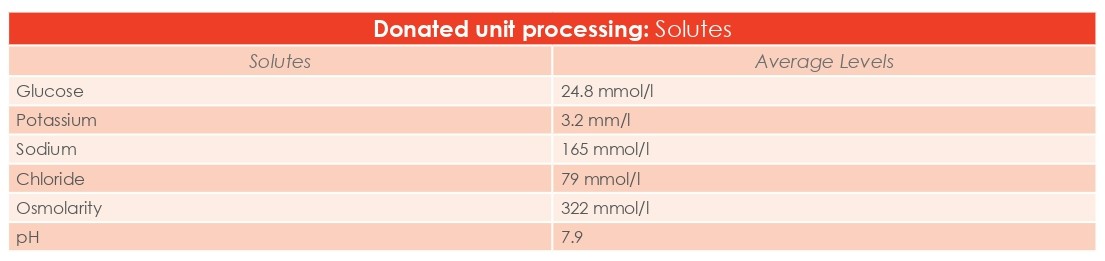
FFP is hyperosmolar due to the solutes listed in Table 2 below. In elderly and very young patients, care should be taken not to precipitate pulmonary oedema if cardiopulmonary function is compromised and tissue oedema is present.
Hypernatraemia and hypokalaemia may occur if large volumes are transfused.
How to administer FFP
FFP must be administered through a blood-giving set, after thawing at 30 °C – 37 °C. The unit should be transfused as rapidly as possible (15 – 20 minutes per unit), with a recommended maximum delay after thawing of up to 4 hours, as labile coagulation factors deteriorate within a few hours of thawing or reconstitution.
Volume and dosage guidelines
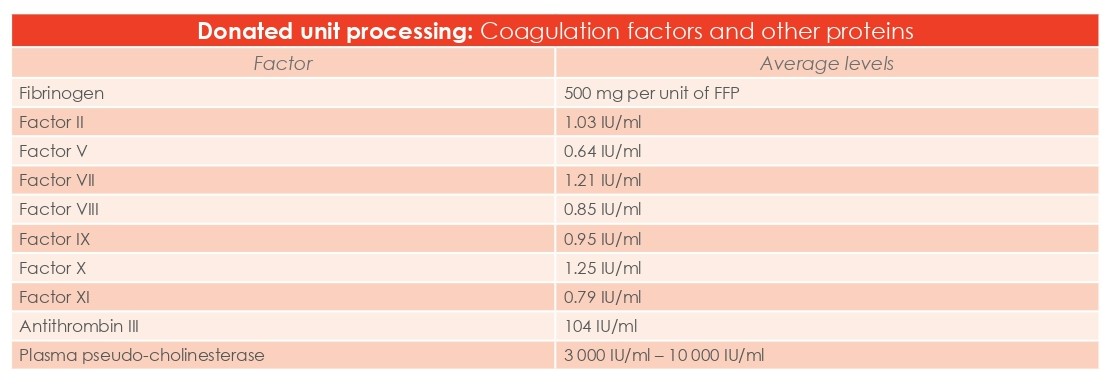
The volume of an adult unit of FFP is 240 ml – 300 ml and its important constituents are listed in Tables 1 and 2. The initial dose recommendation is 10 ml/kg – 15 ml/kg. Further therapy is dependent on clinical response and laboratory monitoring.
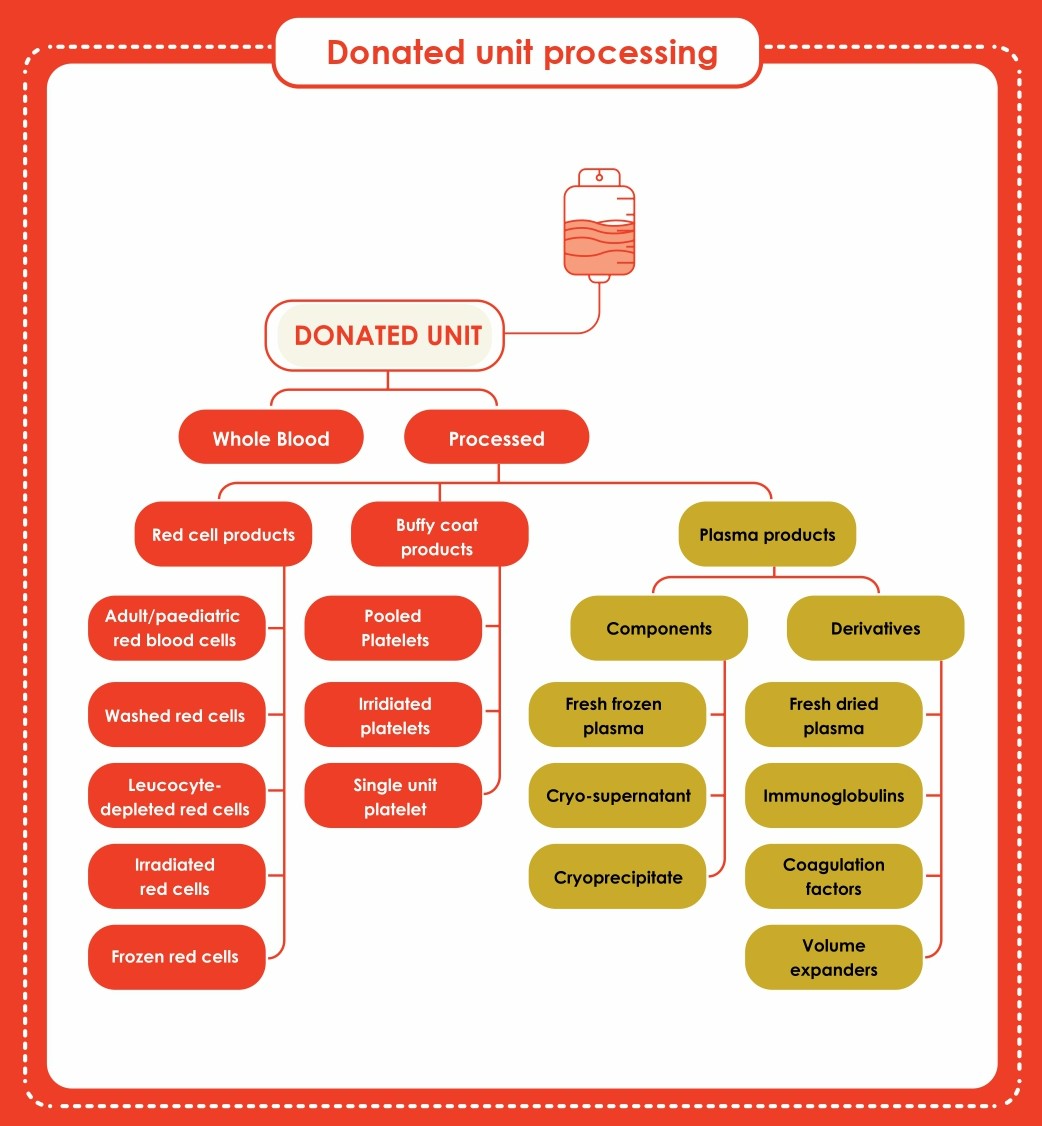 Click on image to enlarge
The coagulation factors and solutes in FFP are shown in Tables 1 and 2 below.
Table 1
Click on table to enlarge
Table 2
Click on table to enlarge
Indications in adults
The evidence-based clinical indications for FFP in adults are:
- Replacement of inherited single factor deficiencies where a specific factor concentrate is not available
- Multiple coagulation factor deficiencies (DIC, massive blood transfusion, liver disease) with active bleeding and abnormal coagulation screening tests
- TTP (preferably use cryo-poor plasma)
- Reversal of warfarin overdose if a prothrombin complex concentrate is not available
- Vitamin K deficiency associated with active bleeding, e.g. haemorrhagic disease of the newborn (HDN)
- Suxamethonium (scoline) apnoea
Use of FFP is not justifiable and therefore not recommended in the following scenarios:
- Hypovolaemia
- First resuscitation fluid in haemorragic shock
- Plasma exchange (except in TTP)
In June 2010, AABB (formerly the American Association of Blood Banks) published a meta-analysis and evidence-based guidelines for plasma transfusion. The guidelines suggest that plasma transfusion be used in 2 patient groups – those requiring massive transfusion and those with intracranial haemorrhage related to warfarin therapy.
Plasma transfusion at high plasma:red cell ratios (1:1) in massive transfusion was associated with a reduction in the risk of death and multi-organ failure, although the quality of the evidence was low. There was insufficient data to recommend for or against transfusion of plasma in patients undergoing surgery in the absence of massive transfusion or in the absence of intracranial haemorrhage.
Many institutions are using plasma that has been thawed and stored in a liquid state at 1 °C – 6 °C for 5 days post thawing. Ideally, a diagnosis of coagulopathy should be rapidly established before FFP is given – preferably using point-of-care tests, e.g. thromboelastography (TEG) or rotational thromboelastography (ROTEM). Such tests can provide results within 15 minutes.
Indications in paediatric patients
Indications for FFP in paediatric patients include:
- Neonates with a significant risk of bleeding: international normalized ratio (INR) or APTT >1.5
- Haemorrhagic disease of the newborn (while waiting for response to vitamin K)
- Congenital coagulation deficiencies where a specific factor concentrate is not available or the deficient factor has not been identified
FFP is not recommended:
- To treat sepsis
- As a volume replacement fluid
- To treat erythrocytosis/polycythaemia
- For routine prophylactic use to treat pulmonary venous hypertension (PVH) in pre-term infants
ABO group-specific plasma (or preferably AB plasma if available) is recommended. Group O FFP should not be given to neonates who are not group O unless the anti-A and anti-B titres have been screened for and are low. A dose of 10 ml/kg – 20 ml/kg is recommended, to be administered via a standard blood-administration set (170 μm – 200 μm filter) or via a syringe with equivalent filtration.
As FFP is hyperosmolar, fluid overload is a risk in normovolaemic patients and close monitoring is advisable.
Cryoprecipitate
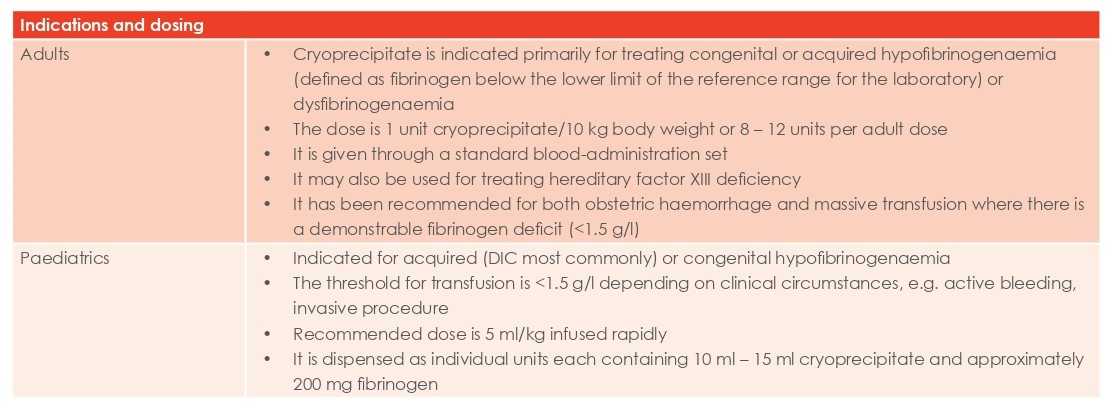
This is the cold-insoluble fraction of FFP and is obtained by thawing FFP at 0 °C – 4 °C. It can be stored at or below -18 °C for up to 1 year. It is available in volumes of up to 15 ml. Cryoprecipitate contains:
- Factor VIII/von Willebrand factor (vWF) – approximately 100 IU per unit
- Fibrinogen (150 mg – 200 mg per unit)
- Fibronectin
- Factor XIII
Table 3
Click on table to enlarge
Cryosupernatant (cryo-poor FFP)
This is the component available following extraction of cryoprecipitate from FFP. It is stored in limited quantities.
Cryosupernatant is indicated for use in therapeutic plasma exchange in the management of TTP.
Plasma-derived medicinal products
In terms of the legislation of medicines in South Africa (Regulation 609, 2003), plasma-derived products manufactured from a pool of >12 donations are classified as medicines.
All registered medicines are supplied with a Patient Information Leaflet (PIL), approved by the South African Health Products Regulatory Authority. This leaflet contains detailed information regarding the safe and effective use of the medicine.
Solvent-Detergent Treated FFP
Bioplasma FDP, 28/30.3/405 (S4), National Bioproducts Institute NPC
Produced from pooled fresh human plasma, Bioplasma FDP undergoes a pathogen-inactivation procedure using a solvent-detergent treatment process which inactivates lipoprotein-coated viruses including HIV, HBV and HCV. After reconstitution with water for injection, each 100 ml contains 4 g – 6 g plasma proteins and a minimum of 0.4 IU/ml of each coagulation factor (II, V, VIII, IX and XI).
Bioplasma FDP can be used when plasma and/or coagulation factors are required.
This product is available as either a 50 ml or 200 ml pack, with water for injection and reconstitution (set included). It is stored at room temperature (at or below 25 °C) and contains no antimicrobial agents or preservatives.
Coagulation factor concentrates
Haemosolvate® Factor VIII (S4), National Bioproducts Institute NPC
- Haemosolvate® Factor VIII 300 IU, human factor VIII concentrate, 31/30.3/392
- Haemosolvate® Factor VIII 500 IU, human factor VIII concentrate, Y/30.3/292
This is a factor VIII concentrate prepared from pooled fresh human plasma. Each vial is reconstituted with 10 ml water for injection, for direct intravenous injection and is clinically indicated for the treatment and prophylaxis of coagulation defects caused by haemophilia A and von Willebrand disease (vWD).
It undergoes a viral inactivation step using a solvent-detergent process which inactivates lipid-enveloped viruses, e.g. HIV, HBV and HCV. See Table 1.4 for further details and also refer to the PIL.
Haemosolvex® Factor IX (S4), National Bioproducts Institute NPC
- Haemosolvex® Factor IX, human factor IX complex, W/30.3/191
This is a prothrombin complex concentrate containing prothrombin (factor II), proconvertin (factor VII), Stuart-Prower factor (factor X) and Christmas factor (factor IX). It is reconstituted with 10 ml water for injection, for direct intravenous injection. It is indicated for the treatment of coagulation defects caused by haemophilia B and the treatment of warfarininduced bleeding.
It undergoes a viral inactivation step using a solvent-detergent process which inactivates lipid-enveloped viruses, e.g. HIV, HBV and HCV. Refer to Table 1.4 and the PIL for further details.
Table 4
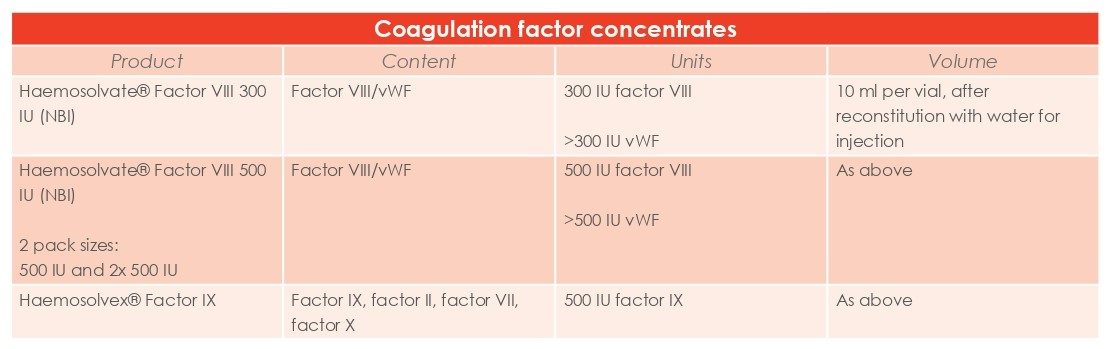
Click on table to enlarge
Dosage schedules and treatment guidelines
For details, refer to your local haemophilia centre and South African treatment guidelines. It is important that all haemophiliacs or any patient with an inherited bleeding disorder be registered with the South African Haemophilia Foundation and be referred to the nearest haemophilia centre for management.
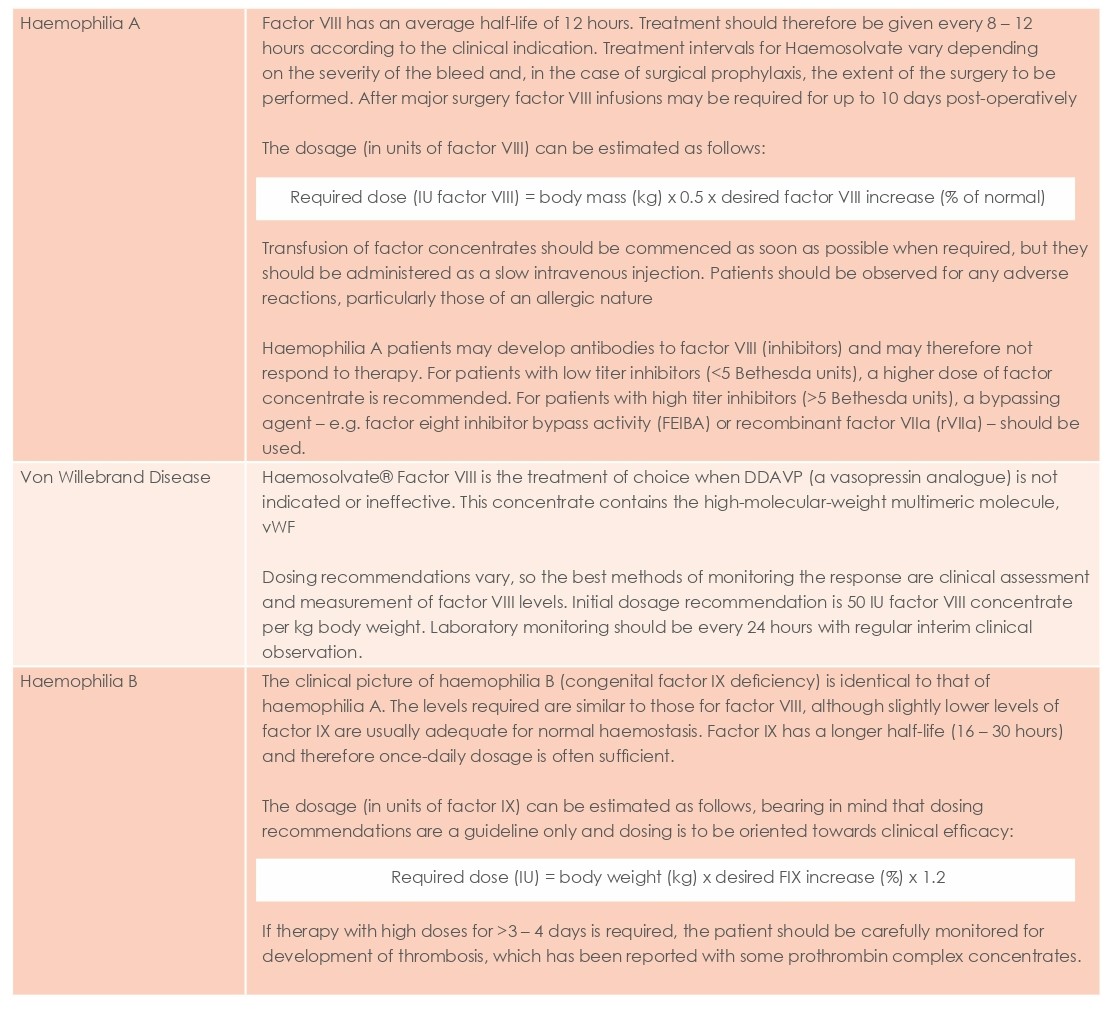
Click on table to enlarge
Plasma expanders (Albumin)
- Albusol® 4%, human plasma albumin 4%, T/30.3/738 (S4), National Bioproducts Institute NPC
- Albusol® 20%, human plasma albumin 20%, T/30.3/739 (S4), National Bioproducts Institute NPC
Both the above are prepared from pooled human plasma. Each donation has been individually tested by serologic and nucleic acid amplification technology for HIV, HBV and HCV and is non-reactive for these tests.
Albumin solutions are prepared by cold ethanol fractionation which further reduces the risk of viral transmission. The albumin solutions are sterilised by filtration and, finally, pasteurised by heat for 10 hours at 60 °C, a process validated to inactivate HIV, HBV and HCV.
Albusol® 4% is a sterile solution containing 4% m/v human plasma albumin, available in a 200 ml pack size (8 g/200 ml). It is stabilised with 0.16 mmol sodium caprylate per gram protein and 3% m/v dextrose. The solution is at pH 7 and each litre contains <130 mmol sodium, <2 mmol potassium and <4 mmol citrate.
Albusol® 20% is a sterile solution containing 20% m/v human plasma albumin, available in 50 ml (10 g/50 ml) and 100 ml (20 g/100 ml) pack sizes. It is stabilised with 16 mmol/l sodium acetyltryptophanate and 16 mmol/l sodium caprylate. The solution is at pH 7 and contains <100 mmol/l sodium, <10 mmol/l potassium and <20 mmol/l citrate.
Clinical indications
Blood volume expansion: Fluid resuscitation in acute clinical conditions associated with hypovolaemia (e.g. trauma) remains controversial. It is not the intention of this guideline to provide a comprehensive review of the subject, but the following is a short summary of current opinions and practice principles:
- Management of hypovolemia involves assessment and treatment of the underlying cause, identification of electrolyte and acid-base disturbances, and assessment and treatment of the volume deficit – all of which influence the choice of fluid and the rate at which it should be administered
- The initial resuscitation fluid of choice for volume expansion is a crystalloid solution – probably a balanced salt solution, although an ideal solution does not exist. Hypoosmolar solutions may pose a risk to patients with head injuries
- If further therapy is required after 2 l – 3 l of crystalloids have been infused, it is appropriate to continue with a colloid solution. Which colloid to use depends to some extent on the duration of effect required and on cost
- An ideal colloid should have a molecular weight of ± 70 kDa (MW albumin 69 kDa; gelatin 30 kDa; HES 60 kDa – 70 kDa; dextrans 40 kDa – 70 kDa)
- Since there is no clinical trial data to support a clear-cut therapeutic advantage for either crystalloids or colloids, the final choice of fluids for resuscitation is ultimately influenced by individual clinician experience and cost considerations
Replacement fluid following paracentesis: Albumin is beneficial in preventing acute complications of hypoproteinaemia caused by loss of plasma proteins and renal impairment.
Therapeutic plasma exchange: Albumin is the replacement fluid of choice for most procedures. The exception is TTP, where FFP or cryosupernatant are indicated.
Burns: Often used after the first 24 hours in severe burns, but there is a lack of randomised clinical trials.
Nephrotic syndrome: May have a short-term, limited role in combination with diuretics for the control of oedema, where diuretics alone have failed.
Dosing guidelines
Refer to package inserts for dosing guidelines.
Clinical contraindications
Albumin solutions appear to have no useful role in malnutrition, cirrhosis and chronic nephrotic syndrome. The above protein solutions should not be given to any patient with a known sensitivity or allergy to human proteins.
Immunoglobulins
Immunoglobulin is the antibody-containing fraction of human plasma obtained by fractionation of pooled plasma units. Each unit has been individually tested and found non-reactive for HIV, HBV and HCV using both serological and nucleic acid amplification technology.
Polygam
- Polygam® 1 g, polyvalent human normal immunoglobulin, Z/30.2/367 (S4), National Bioproducts Institute NPC
- Polygam® 3 g, polyvalent human normal immunoglobulin, Z/30.2/368 (S4), National Bioproducts Institute NPC
- Polygam® 6 g, polyvalent human normal immunoglobulin, Z/30.2/369 (S4), National Bioproducts Institute NPC
- Polygam® 12 g, polyvalent human normal immunoglobulin, 29/30.2/511 (S4), National Bioproducts Institute NPC
This is a polyvalent human normal immunoglobulin for intravenous use, containing mainly immunoglobulin G (IgG), with a broad spectrum of antibodies against infectious agents. It is prepared by cold ethanol fractionation and pH 4.0 pepsin treatment to further reduce the risk of viral transmission. The pH 4.0 pepsin process has been validated and shown to be effective against enveloped viruses, e.g. HIV, HBV and HCV.
Polygam® is available as a lyophilised powder and is reconstituted to a 50 ml volume (1 g/50 ml, 2% solution); a 100 ml volume (3 g/100 ml, 3% solution); a 200 ml volume (6 g/200 ml, 3% solution); and a 400 ml volume (12 g/400 ml, 3% solution). Each pack consists of a clear glass bottle containing lyophilized powder, bag(s) of 0.9% m/v sodium chloride solution and a reconstitution set.
Clinical indications
- Replacement therapy in primary antibody deficiency syndromes
- Myeloma or chronic lymphocytic leukaemia with severe hypogammaglobulinaemia and recurrent infections
- Children with congenital Acquired Immunodeficiency Syndrome (AIDS) and recurrent infections
- For immunomodulation in:
- Primary ITP in children and adults
- Kawasaki Disease
- Guillain-Barré Syndrome
- Allogeneic bone marrow transplantation
- Parvovirus B19-positive pure red cell aplasia
Clinical contraindications
Polygam® should be given with caution to patients with antibodies to IgA or with selective IgA deficiency, as the small amount of IgA present in Polygam® may cause sensitisation. This could lead to a severe allergic reaction and anaphylaxis or subsequent reactions to other IgA-containing products.
Table 5
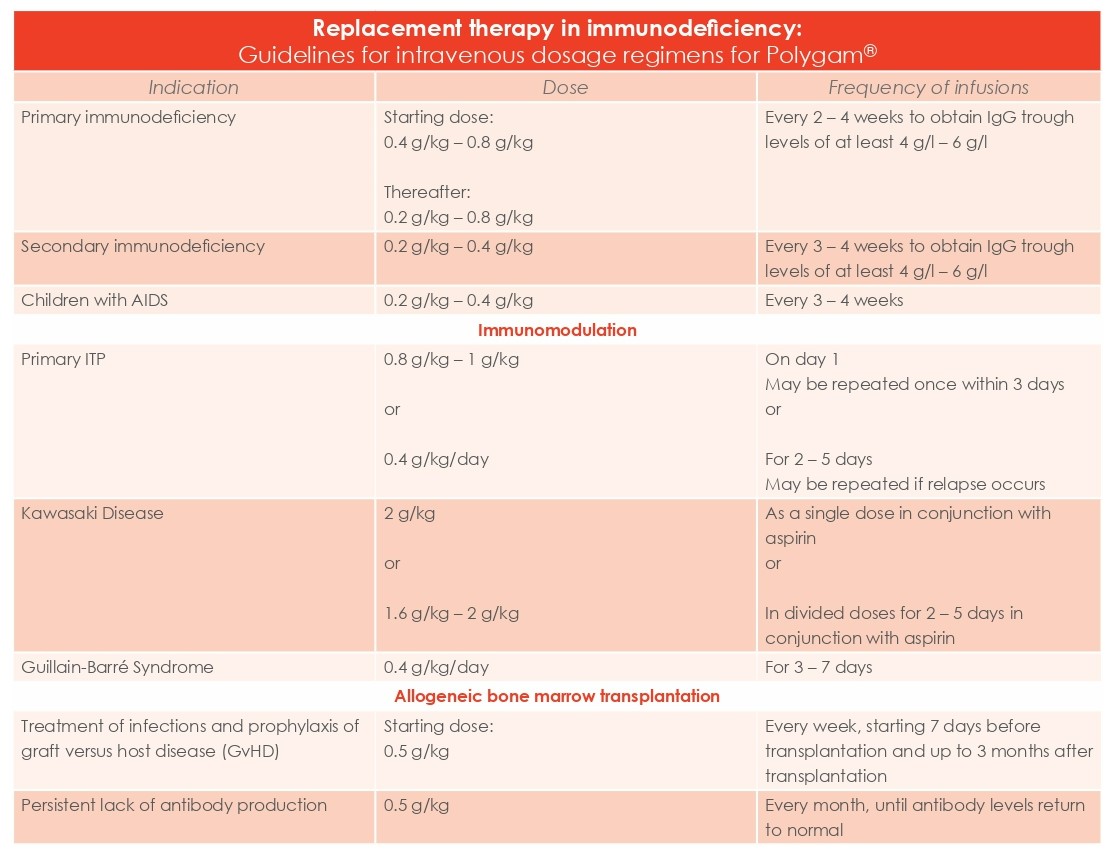
Click on table to enlarge
Immunoglobulins for intramuscular injection
Immunoglobulins for intramuscular injection are produced from the same donor pool as the immunoglobulins described above and are screened in identical fashion.
There are various preparations available, most of which are hyperimmune globulins with high titres for specific antibodies for passive immune prophylaxis.
Table 6
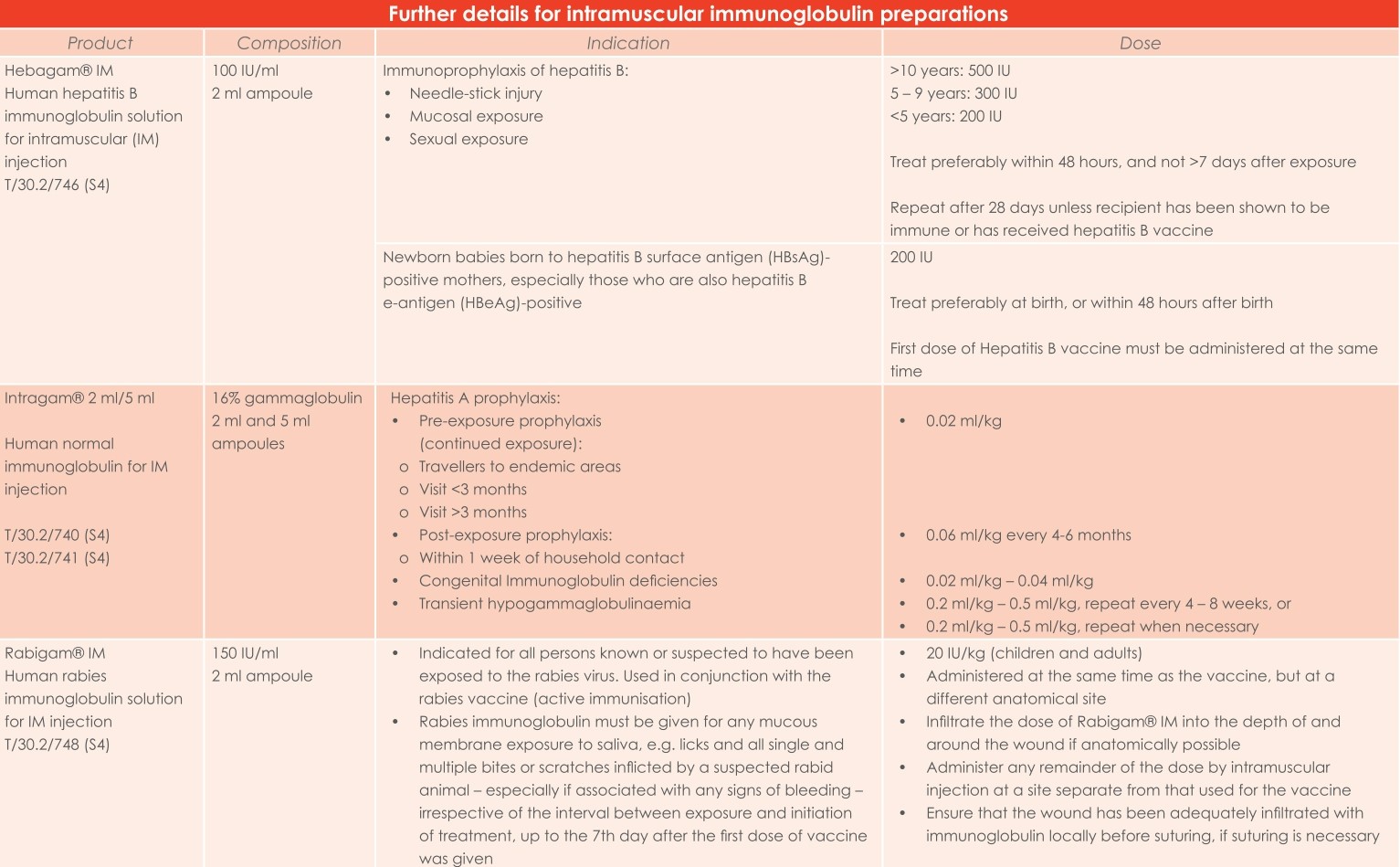
Click on table to enlarge
Table 6 continued
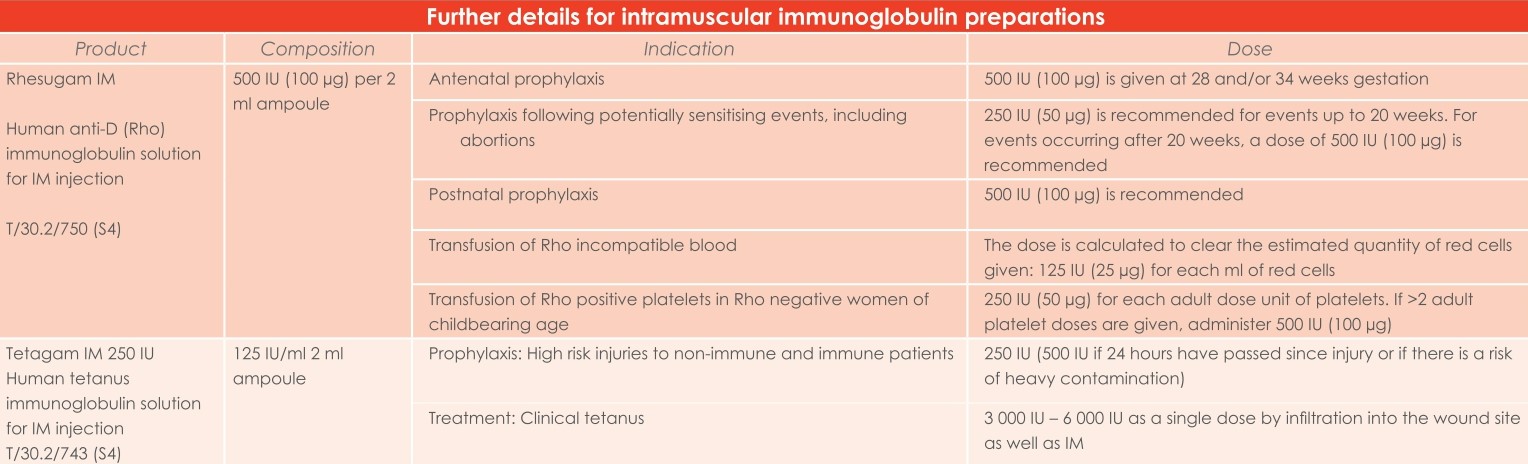
Click on table to enlarge
Further reading
- Martinowitz U, Livnat T, Zivelin A, et al. Concomitant infusion of low doses of rFVIIa and FEIBA in haemophilia patients with inhibitors. Haemophilia. 2009;15(4):904-910. doi:10.1111/j.1365-2516.2009.02028.x
- Noordin SS, Karim FA, Mohammad WMZBW, et al. Coagulation factor activities changes over 5 days in thawed fresh frozen plasma stored at different initial storage temperatures. Indian J Hematol Blood Transfus. 2018;34(3):510-516. doi:10.1007/s12288-017-0879-8
- Philip J, Sarkar RS, Pathak A. The effect of repeated freezing and thawing on levels of vitamin K-dependent coagulation factors and fibrinogen in fresh frozen plasma. Asian J Transfus Sci. 2013;7(1):11-15. doi:10.4103/0973-6247.106715
- Moore HB, Moore EE, Chapman MP, et al. Plasma-first resuscitation to treat haemorrhagic shock during emergency ground transportation in an urban area: a randomised trial. Lancet. 2018;392(10144):283-291. doi:10.1016/S0140-6736(18)31553-8
- South African Government. Government Gazette Regulation 609. Guidelines with respect to the Medicines and Related Substances Act (101 of 1965) as amended, 2003. Accessed March 7, 2023. https://www.sahpra.org.za/wp-content/uploads/2020/02/Government_Gazette_Medicines_and_Devices_Act_Jun_2017-1.pdf
- O’Shaughnessy DF, Atterbury C, Bolton-Maggs P, et al. Guidelines for the use of fresh-frozen plasma, cryoprecipitate and cryosupernatant. Br J Haematol. 2004;126(1):11-28. doi:10.1111/j.1365-2141.2004.04972.x
- Roback JD, Caldwell S, Carson J, et al. Evidence-based practice guidelines for plasma transfusion. Transfusion. 2010;50(6):1227-1239. doi:10.1111/j.1537-2995.2010.02632.x
- Murad MH, Stubbs JR, Gandi J et al The effect of plasma transfusion on morbidity and mortality: a systematic review and metaanalysis. Transfusion. 2010;50:1370-1383. Doi:10.1111/j.1537-2995.2010.02630.x
- Yazer MH, Cortese-Hassett A, Triulzi DJ. Coagulation factor levels in plasma frozen within 24 hours of phlebotomy over 5 days of storage at 1 to 6 degrees C. Transfusion. 2008;48(12):2525-2530. doi:10.1111/j.1537-2995.2008.01913.x
- Barron ME, Wilkes MM, Navickis RJ. A systematic review of the comparative safety of colloids. Arch Surg. 2004;139(5):552-563. doi:10.1001/archsurg.139.5.552
- James MA. Volume expanders: crystalloids vs plasma colloids vs synthetic colloids. ISBT Science Series. 2006;1:52-58
- Ahmed S, Harrity C, Johnson S, et al. The efficacy of fibrinogen concentrate compared with cryoprecipitate in major obstetric haemorrhage--an observational study. Transfus Med. 2012;22(5):344-349. doi:10.1111/j.1365-3148.2012.01178.x
- South African National Blood Services. Navigation to a safe blood transfusion – nurses guide. 2020. Accessed March 7, 2023. https://sanbs.org.za/wp-content/uploads/2020/01/Navigation-to-a-safe-blood-transfusion-nurses-guidelines-Feb-2020-revision-2-002.pdf
- Sørensen B, Bevan D. A critical evaluation of cryoprecipitate for replacement of fibrinogen. Br J Haematol. 2010;149(6):834-843. doi:10.1111/j.1365-2141.2010.08208.x
- Mahlangu JN, Gilham A. Guideline for treatment of haemophilia in South Africa. S Afr Med J. 2008;98(2):126-140. doi:10.7196/ SAMJ.336
Clinical Guidelines for the Use of Blood and Blood Products in South Africa, 6th Edition, 2023