Protocol for the Management of Hypertensive Disorders in Pregnancy
These protocols are intended for the use of students, interns and registrars within Tygerberg hospital and its immediate catchment area only. Always consult with a senior colleague if you are unsure of the correct management.
Classification and Definitions
Standard for Measuring Blood Pressure in Pregnancy
Proteinuria Workup in Pregnancy
A Practical Approach to Managing Proteinuria in Pregnancy
Maternal Features of Severe Disease
At Tygerberg hospital (TBH) we use the International Society for the Study of Hypertension in Pregnancy (ISSHP 2018) Classification and Definitions of HDP1 and this protocol quotes extensively from the ISSHP recommendations. It is also aligned to the 2019 national DoH guideline on HDP.
List of Abbreviation
|
List of Abbreviations
|
|
| AEDF | Absent end-diastolic flow |
| AKI | Acute kidney injury |
| ALT | Alanine aminotransferase |
| ASHT | Acute severe hypertension |
| AST | Aspartate aminotransferase |
| BP | Blood pressure |
| BMI | Body mass index |
| CH | Chronic hypertension |
| Cr | Creatinine |
| DoH | Department of Health |
| DuP | Daily urine protein |
| EFW | Estimated fetal weight |
| EOPE | Early onset pre-eclampsia |
| GH | Gestational hypertension |
| Hb | Haemoglobin |
| HIVAN | HIV-associated nephropathy |
| HDP | Hypertensive disease of pregnancy |
| HRC | High-risk clinic |
| ISSHP | International Society for the Study of Hypertension in Pregnancy |
| IU | International units |
| IUGR | Intra-uterine growth restriction |
| LDH | Lactate dehydrogenase |
| MCR | Maternity case record |
| MUAC | Mid-upper arm circumference |
| MgSO4 | Magnesium sulphate |
| OPD | Outpatient clinic |
| PCR | Protein:creatinine ratio |
| PE | Pre-eclampsia |
| Plt | Platelets |
| REDF | Reversed end-diastolic flow |
| SA | South Africa |
| SF | Symphysis-fundus |
| SLE | Systemic lupus erythematosus |
| SOP | Standard operating procedure |
| TBH | Tygerberg Hospital |
| TOP | Termination of pregnancy |
| UAD | Umbilical artery doppler |
| U-MCS | Urine microscopy, culture and sensitivity |
Classification and Definitions
|
Hypertension Known Before Pregnancy or Present in the First 20 Weeks
|
|
Chronic hypertension (essential or secondary)
White-coat hypertension
|
|
Hypertension (New Onset) Arising at or After 20 weeks
|
|
Transient gestational hypertension
Gestational hypertension
Pre-eclampsia (new onset) or superimposed on chronic hypertension
|
Hypertension in Pregnancy
Defined as Systolic BP ≥140 mmHg and/or diastolic BP ≥90 mmHg.
BP should be repeated to confirm true hypertension
- If BP is severe (systolic BP ≥160 and/or diastolic BP ≥110 mmHg), then the BP should be confirmed within 15 minutes.
- For less severe BP, repeated readings should be taken within a few hours.
White coat hypertension is high blood pressure readings ONLY in a medical setting (and normal at home) already present from early pregnancy
Transient gestational hypertension is hypertension that arises in the second or third trimesters but then settles with repeated BP readings without the need of medication. There is a 20% risk of developing GH and a further 20% risk for PE. Therefore, these women should be followed up more frequently
When a woman presents with hypertension or pre-eclampsia in pregnancy at or after 20 weeks’ gestation and the earlier BP is unknown, she should be managed as if she has gestational hypertension or pre-eclampsia (previously called ‘unclassified hypertension’).
Borderline blood pressure (also called pre-hypertension) in low risk pregnant women (135/85-139/89 mmHg) (not an ISSHP definition but included in national DoH HDP guideline): BP repeated within 30 mins – 2 hours and if still borderline asked to return within 3-7 days. Due to pregnancy-related decrease in blood pressure, the clinician should be wary of borderline values in the first half of gestation. If after repeat measuring the blood pressure is normal the woman can be followed up as usual
Gestational hypertension is managed by controlling the blood pressure, monitoring for the development of pre-eclampsia at every visit and on the fetal side performing a UAD and monitoring fetal growth using SF measurements. If the pregnancy is otherwise uncomplicated, delivery can be arranged at full term.
Chronic hypertension is associated with adverse maternal and fetal outcomes and is best managed by tightly controlling maternal blood pressure (BP 110-140/85 mmHg), monitoring fetal growth, UAD at 26 weeks to screen for placental insufficiency and repeatedly assessing for the development of pre-eclampsia and maternal complications. If the pregnancy is otherwise uncomplicated, delivery can be arranged at full term.
Preeclampsia superimposed on chronic hypertension
- Occurs in about 25% of cases.
- Diagnosis is made when a woman with chronic hypertension develops any maternal condition described in the diagnosis of pre-eclampsia (see Diagnosing pre-eclampsia)
- Fetal growth restriction may be part of chronic hypertensive disease and cannot be used as a diagnostic criterion for superimposed preeclampsia.
- New-onset significant proteinuria in the absence of pre-existing proteinuria is enough to make the diagnosis of superimposed PE.
- When proteinuria was already present due to pre-existing renal disease or metabolic syndrome, a rise in quantity of proteinuria alone may not be enough to diagnose super-imposed pre- eclampsia. For practical purposes (in the absence of robust evidence) a rise of more than double the baseline (if the baseline was already >0.3g/24hr) prompted by clinical findings (e.g. loss of BP control, increase in proteinuria on dipstick, fetal affectation (IUGR)) can be used to diagnose super-imposed pre-eclampsia. Do not routinely repeat a DuP (assuming that a baseline was done at booking) unless there is a change in clinical presentation, or significant renal risk
Standard for Measuring Blood Pressure in Pregnancy
- Use machines validated for pregnancy.
- BP to be taken in the relaxed sitting position with legs uncrossed and feet supported. The arm should be supported and free of clothing.
- Cuff should be at the level of the heart.
- Use correct cuff size (length of 1.5 times the circumference of the arm).
- If the MUAC > 33cm, a larger cuff size (15x33 cm) should be used.
- The BP should be repeated in 15 minutes if there are slight elevations in BP.
Proteinuria Workup in Pregnancy
- Proteinuria is not essential for a diagnosis of preeclampsia (but is present in >75% of cases).
- A negative dipstick (done correctly) can be accepted as negative and no further work-up is required if the patient is not hypertensive (there is a 7% false negative rate, so ongoing clinical review is needed in cases of hypertension with negative dipstick 2).
- Dipstick urinalysis measures the concentration of protein in the urine and is susceptible to fluctuations in the water content of the urine; therefore, the sensitivity (to accurately predict the presence of proteinuria) may vary. Repeated tests are more valuable than a single reading.
- The current reagent strips for urinalysis on tender measures 1+ as equal to 0.3g/l. A trace (0.15g/l) can be regarded as negative (but there is a 14% false negative rate, so ongoing clinical review is needed in cases of hypertension2 ).

Click on image to enlarge
- ISSHP regards 1+ (0.3g/l) as positive (which needs confirmation). Dipstick testing is reasonably accurate at levels of 2+ (>1g/l).
- Urine Protein:Creatinine ratio (PCR) is quick (same day result), inexpensive and useful to ‘rule out’ significant proteinuria of 0.3g/24 hours (good negative likelihood ratio).
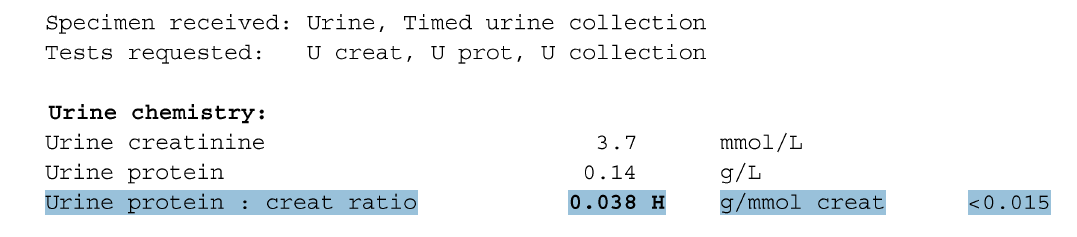
- The NHLS reports PCR in g/mmol creatinine:
The recommended cutoff (ISSHP 2018): values below 30mg/mmol = 0.030g/mmol to rule out proteinuria of 0.3g/24 hours.
Click on image to enlarge
- The PCR is not useful to quantify the amount of proteinuria, especially in the higher ranges and needs confirmation with a DUP3.
- A 24-hour collection is time consuming and more expensive but may have some prognostic features in addition to a PCR and is therefore more useful in patients that qualify for expectant management or where progression of proteinuria from a baseline is important for management. It is less useful in an acute setting where PCR is preferred.
A Practical Approach to Managing Proteinuria in Pregnancy
Women who Qualify for a Routine (Baseline) DuP at First Visit (<20 weeks) Regardless of Dipstick Results
- All diabetics at first visit (*pregestational diabetes) or at first diagnosis.
- *BMI 40kg/m2 or above.
- *Chronic hypertension.
- *Known metabolic syndrome (presence of at least three of the following: abdominal obesity, high triglycerides, low high-density lipoprotein cholesterol, high blood pressure, elevated fasting blood sugar).
- *SLE.
- Chronic renal disease.
- HIV-associated nephropathy (HIVAN).
Those marked with *should also be started on aspirin 150mg at night and calcium 1g/day; if <20 weeks.
Management of Women with Proteinuria but NO Hypertension Diagnosed at Routine Outpatient Visits:
- 1+: repeat dipstick with a clean midstream sample. If still 1+: Do U-MCS and follow up in two days for results. Do not treat empirically for UTI except if there are associated signs and symptoms of UTI.
If still 1+ at follow-up and negative MCS, do outpatient DuP to establish a baseline protein level. - ≥2+: repeat dipstick with a clean midstream sample. If still 2+: Do U-MCS and evaluate the clinical situation:
If there is a very low risk of pre-eclampsia: do outpatient DuP to establish a baseline protein level. Follow up within 1-2 days for results.
In all other cases, it may be safer admit the patient for 24-hour blood pressure monitoring and DuP to obtain baseline. If no bed available, do DuP as outpatient but follow up for result and BP check within 1-2 days.
Management of Women with a Presumptive Diagnosis of Pre-Eclampsia (Hypertension WITH other Features Suggestive of Pre-Eclampsia)
Persistent proteinuria on dipstick (≥2+ or more with every measurement over a few hours):
- Does not need confirmation with PCR or 24-hour collection (DuP) if delivery is indicated due to maternal or fetal reasons or gestation ≥34 weeks (or EFW >1800 g with uncertain gestation).
- In stable patient <34 weeks who qualifies for and agrees to expectant management, perform a DuP to identify women with heavy proteinuria requiring thromboprophylaxis as a PCR is less accurate at higher levels. Patients whose maternal and fetal work-up is complete barring the DUP can be referred to special care for expectant management before the result is available, as the diagnosis of pre-eclampsia was based on persistent 2+.
- In women with suspected EOPE with severe features necessitating delivery (TOP) before there is a reasonable chance to attain fetal viability, persistent 2+ proteinuria does not need confirmation with a DuP for diagnosis. A DuP is still indicated to guide thromboprophylaxis in the peri- or post-partum period.
Persistent proteinuria on dipstick of 1+ with every measurement over a few hours:
- Confirm with PCR if delivery will be indicated with a confirmed diagnosis of pre-eclampsia (e.g. ≥34 weeks (or EFW >1800 g with uncertain gestation)
- In a stable patient <34 weeks who would qualify for and agree to expectant management (if pre-eclampsia is confirmed), do a DuP to confirm and quantify proteinuria. Await DuP result before referral for special care.
- In women with suspected EOPE with severe features necessitating delivery, before there is a reasonable chance to attain fetal viability (TOP), persistent 1+ proteinuria does not need any test for confirmation, as delivery would be for the severe features. A DuP is still indicated to guide thromboprophylaxis in the peri- or post-partum period.
Intermittent proteinuria on dipstick (0-1+):
- Do a PCR to exclude/diagnose pre-eclampsia if gestation ≥34 weeks (or EFW >1800 g with uncertain gestation).
- In stable patient <34 weeks who would qualify for and agrees to expectant management if PE is confirmed, do a DuP to confirm the diagnosis and quantify the proteinuria. Await DuP result before referral for special care.
- In women with suspected EOPE but without severe features, do a DuP to evaluate the safety of continuation of the pregnancy
Diagnosing Pre-Eclampsia
Preeclampsia is defined as gestational hypertension accompanied by one or more of the following new-onset conditions at or after 20 weeks’ gestation:
- Significant proteinuria
- Other maternal organ dysfunction, including:
- Utero-placental dysfunction (such as *fetal growth restriction not due to CH, **abnormal umbilical artery Doppler, or stillbirth).
- Renal: AKI (creatinine ≥90umol/L***).
- Liver: (elevated transaminases, e.g., ALT or AST >40 IU/L***) with or without right upper quadrant or epigastric abdominal pain.
- Neurological: (examples include eclampsia, altered mental status, blindness, stroke, clonus, severe headaches not accounted for by alternative diagnoses and not responding to usual doses of analgesics, or persistent visual scotomata).
- Haematological: (platelet count <150 000/μL, disseminated intravascular coagulation or haemolysis on blood smear)
*For the purpose of this protocol, fetal growth restriction <32 weeks is defined as EFW <10th centile AND umbilical artery Doppler ≥95th centile, AEDF or REDF. All these patients must be referred for evaluation to the fetal medicine unit/sonar unless urgent delivery is required for other indications.
**Refer all women with abnormal UA Doppler (≥95th centile, AEDF or REDF) but with EFW >10th centile to the ultrasound unit.
***If in the absence of proteinuria, the diagnosis of pre-eclampsia is made on other appropriate biochemistry results and if the patient is otherwise stable and before 34 weeks, it is reasonable to practice expectant management. Administer antenatal corticosteroids, and repeat the laboratory tests (AST or ALT, platelet count) every 8-12 hours while the patient is in the labour ward to see if they improve.
Maternal Features of Severe Disease
- Systolic blood pressure ≥160 mmHg or diastolic blood pressure ≥110 mmHg on two occasions at least 4 hours apart.
- Thrombocytopenia (platelet count less than 100 000/μL).
- Impaired liver function as indicated by abnormally elevated blood concentrations of liver enzymes (ALT or AST >40 IU/L) or severe persistent right upper quadrant or epigastric pain unresponsive to medication and not accounted for by alternative diagnoses.
- HELLP syndrome (platelets <100 000/ μL AND AST > 70μl AND LDH > 600 μl)4 .
- Renal insufficiency (serum creatinine concentration more than ≥120 μmol/L).
- Pulmonary edema.
- New-onset severe headache unresponsive to medication and not accounted for by alternative diagnoses.
- Visual disturbances.
- Ascites (moderate/severe).
Management of HDP
- Regardless of the hypertensive disorder of pregnancy, blood pressures consistently at or above 140/90 mmHg should be treated, aiming for a target diastolic blood pressure of 85 mmHg and systolic blood pressure of 110-140 mmHg5.
- Antihypertensive drugs should be reduced or ceased if diastolic BP falls below 80mmHg.
Asymptomatic Moderately Hypertensive Patient with No Proteinuria (Diastolic BP ≥ 90mmHg but < 110mmHg or Systolic BP ≥ 140mmHg but < 160mmHg).
- Repeat blood pressure after a few hours to confirm true hypertension.
- If repeat BP is normal, follow up within two days to measure BP again- remember that transient hypertension still has a risk of developing pre-eclampsia later in pregnancy.
- If still diastolic ≥ 90mmHg but < 110mmHg or systolic BP still 140-159mmHg:
- Start treatment with α-methyl dopa 500mg orally 8 hourly
- Classify as either chronic or gestational hypertension
- Do Umbilical Artery Doppler test, if gestation ≥ 24 weeks
- Do an outpatient baseline DuP as the patient is at risk of having an undiagnosed renal lesion or developing PE.
- If the Doppler and DuP is normal and the blood pressure is controlled, make a note in the MCR and make patient level 1 (shared care/doctor’s clinic) [if no other reason to remain at HRC] and ask them to review within 1 week to ensure BP control and no new diagnosis of proteinuria.
- Book for delivery at full term at a district hospital (if no indication for earlier delivery arises)
- Follow up is every two weeks until 34 weeks, then every week
- If blood pressure does not stabilise at 110-140/85 mmHg and there is no new proteinuria increase α-methyl dopa to 750mg orally 8 hourly and review again in 1 week.
- If blood pressure still not stable and no new proteinuria then add a second antihypertensive agent, nifedipine XL 30mg daily. Review the patient in 1 week (refer back to Tygerberg for this visit). (In this manner nifedipine XL can be stepwise increased to 60mg twice daily).
- If the blood pressure is still uncontrolled (diastolic BP > 100 mmHg but < 110 mmHg) and no new proteinuria refer to Obstetric Special Care Unit for opinion on further management, e.g. third line antihypertensive drug or delivery.
- If at any stage new onset proteinuria is noted, refer to section below
Asymptomatic Moderately Hypertensive Patient (Diastolic BP ≥ 90mmHg but <110 mmHg or Systolic BP ≥ 140 mmHg but < 160 mmHg) WITH Proteinuria ≥ 1+.
- Admit patient/manage patient as in-patient
- Do serum creatinine, haemoglobin and platelet count.
- Do EFW (if remote from term) and UAD [if gestation ≥ 24 weeks].
- Start treatment with α-methyl dopa 500mg orally 8 hourly.
- Write up additional nifedipine 10 mg orally, on each occasion that the diastolic blood pressure rises to ≥110mmHg or systolic blood pressure rises to ≥160mmHg with instructions to the nursing staff that the doctor must be informed about the administration of nifedipine. Repeat BP measurement after 30 minutes if severe HT persists.
- Confirm proteinuria with dipstick, PCR or DUP as appropriate (see section on Proteinuria).
- Diagnose or exclude pre-eclampsia based on the ISSHP criteria and classify as gestational hypertension, chronic hypertension, pre-eclampsia or super-imposed pre-eclampsia as appropriate.
- If pre-eclampsia confirmed manage accordingly
If the blood pressure is well controlled, and pre-eclampsia is not diagnosed, the patient can be discharged:
- If the general work up was done and no end organ damage was found.
- Make appropriate notes in the MCR and manage further as above (refer to district hospital if no other reason to remain at specialist level).
If the diagnosis of pre-eclampsia was made, refer to the section below.
Normotensive Patients with Proteinuria on Dipstick
- Do workup as specified in section on proteinuria.
- If significant proteinuria is detected (DuP ≥0.3g protein/24 hours), do outpatient BP profile and workup for chronic renal disease (renal ultrasound etc.).
- If no hypertension present and no cause for persistent proteinuria found, the diagnosis of gestational proteinuria is made.
- This may be the first feature of pre-eclampsia which can develop later, so careful surveillance (weekly OPD BP check at district level) is needed.
- Gestational proteinuria without any previous complications and without other features of pre-eclampsia can deliver spontaneously at term in a district hospital.
- If there is a history of previous adverse outcome (e.g. EOPE, IUGR, stillbirth, abruptio) further management is at HRC and timing of delivery is individualised based on the previous risks
Management of the Symptomatic Patient/Patient with Severe Features
- Administer Magnesium Sulphate (use protocol) and admit to the emergency centre (labour ward, C2A).
- Manage acute severe hypertension promptly (see Management of Acute Severe Hypertension).
- In labour ward: insert urinary catheter, site intravenous line with Ringer’s Lactate Solution and control the IV fluid flow at 80ml/hour (adjust fluids accordingly if also on MgSO4 so that the total volume of IV fluid is not more than 80ml/h).
- Continue with MgSO4 as long as severe features are present.
- Do serum creatinine, haemoglobin, platelet count, AST, LDH. If remote from term and expectant management may be appropriate, do EFW and UAD [UAD only if gestation ≥ 24 weeks].
- Add maintenance anti-hypertensive treatment [start with nifedipine XL 30mg daily and increase as needed to a maximum of 60mg 2x/day and add α-methyl dopa 500mg 8 hourly (maximum 750mg 3x/day) if needed as a second line drug].
- Write up additional nifedipine 10 mg orally, for every time the diastolic blood pressure rises to ≥110mmHg or systolic blood pressure rises to ≥160mmHg with instructions to the nursing staff that the doctor must be informed about the administration of nifedipine.
- Investigate proteinuria with dipstick, PCR or DUP as appropriate (see section on Proteinuria).
- Diagnose or exclude pre-eclampsia based on the ISSHP criteria and classify as gestational hypertension, chronic hypertension, pre-eclampsia or super-imposed pre-eclampsia as appropriate.
Management of Eclampsia at any Gestation
- Call for help and turn patient onto her side, preferably left lateral position.
- Clear airway and give oxygen.
- Set up IV line with Ringer’s Lactate and pre-load patient with 200ml. Limit fluids after that to 80 ml/hour
- Dilute 4g MgSO4 (8ml 50% solution) in a 200ml saline infusion bag. Give slowly intravenously over 20 minutes. Institute a continuous maintenance infusion of 1g per hour (refer to MgSO4 Protocol).
- A further 2g MgSO4 (20% Solution) should be given intravenously when convulsions reoccur or persist despite the loading dose of magnesium sulphate.
- Insert Foley’s catheter and measure urine output hourly.
- Measure blood pressure every 15 minutes, until stabilised. Control blood pressure using rapid acting antihypertensives (Refer to Section E). Keep diastolic blood pressure between 90 and 100 mmHg.
- Plot maternal observations on the MgSO4 observation chart in the MCR.
- Only assess the fetal condition once the mother is stable. Do EFW if at margins of viability. Obtain baseline CTG [if sure gestation ≥ 27w0d AND EFW ≥ 800g]
- Eclampsia is always an indication for delivery, regardless of gestation. Arrange for delivery within 24 hours but give steroids if <34 weeks. Do not allow time for steroid effects, rather start IOL as soon as mother is stable.
- The labour ward consultant must be informed of all patients with eclampsia. Preferable location for labour is in the OCCU, especially with recurrent seizures, abnormal biochemistry or other aggravating features.
- If not in established labour within 18 hours of the first eclamptic seizure, consider expedited delivery with CS (individualise; discuss with consultant).
- Post-delivery management includes at least 24 hours of MgSO4 infusion in acute post-natal/Orange room bed.
Management of Confirmed Pre-Eclampsia
- The only cure for pre-eclampsia is delivery.
- Do an EFW and umbilical artery Doppler when expectant management will be offered or when the fetus is close the limits of viability.
- When expectant management of early pre-eclampsia is considered, a maternal and fetal work-up is required.
- Use the SGA, abnormal Doppler and Fetal Viability protocols to help guide management.
Do not attempt to classify preeclampsia clinically as mild or severe. All cases may deteriorate rapidly.
MgSO4 must be administered for all women with severe features during labour.
Indications for delivery
The following are indications for delivery in women with pre-eclampsia at Tygerberg Hospital, regardless of the gestation (try to gain at least 48 hours for steroid effects and neuroprotection where indicated, if the clinical situation allows):
- Pre-eclampsia at a gestation of 34 weeks or more, or with EFW of 1800g or more if unknown gestation – do not await steroids.
- Repeated episodes of severe hypertension despite maintenance treatment with three classes of antihypertensive agents.
- Progressive deterioration in liver function, haemolysis, platelet count (HELLP syndrome) or creatinine.
- Pulmonary edema or maternal pulse oximetry <90%.
- Ongoing abnormal neurological features, such as severe intractable headache, repeated visual scotomata or clonus.
- Maternal ascites (moderate/severe)6.
- Severe placental insufficiency (any persistent AEDF >32 weeks, any REDF >30 weeks, any reversed a-wave in ductus venoses >29 weeks (irrespective of EFW centile, provided viability criteria were met).
- Non-reassuring fetal status on CTG.
Management of pre-eclampsia between viability (27 weeks AND 800g) and 34 weeks
- These patients may benefit from expectant management7,8 if mother and fetus are stable after the first 48 hours of admission (and there are no contra-indications to expectant management)
- Counselling must be given that includes benefits, risks and professional alternatives. The notes should reflect this and the patient’s informed autonomous choice.
- Use a tick sheet (available in the wards) to ensure all relevant maternal and fetal investigations are available and deliver (if expectant management not appropriate) or refer to the special care registrar for further opinion.
- Women undergoing expectant management outside of the special care ward (e.g. in F2 or J4) must be co-managed in conjunction with the special care team. Generally, they need at least the following management after the initial workup was done:
- Four hourly BP monitoring and daily adjustment of anti-hypertensive medication as needed.
- Daily examination for severe signs (including clonus) and for maternal ascites.
- Daily CTG (if capacity allows, aim for six hourly CTGs) which must be signed by a registrar.
- Twice weekly biochemistry (more frequently if there are significant abnormal indices).
- Repeat sonar evaluation of fetus at two-weekly intervals (to be done by accredited registrar or MO - plot on appropriate charts and follow SGA protocol if appropriate).
- Daily assessment by the ward consultant.
- Deliver when any of the endpoints are reached.
- They must remain on a waiting list for a special care bed, with the smallest fetus prioritised.
Contra-indications for expectant management
- Maternal request for immediate delivery.
- Symptoms of severe disease (persistent, incapacitating headache, vision abnormalities, epigastric/right upper quadrant pain that has not settled during the first 48 hours of management).
- HELLP syndrome.
- Maternal ascites (moderate/severe).
- Severe renal impairment or renal failure (creatinine >120μmol/l).
- Persistent severe hypertension unresponsive to medical therapy.
- Severe IUGR- any persistent AEDF >32 weeks, any REDF >30 weeks, any reversed a-wave in ductus venoses >29 weeks (irrespective of EFW centile, provided viability criteria were met).
- Non-reassuring fetal status (CTGs must be normal during the last 12 hours before referral).
Management of pre-eclampsia close to fetal viability
- If workup shows a fetus very close to viability (24 week or more) and there is a reasonable chance that expectant management will gain enough time that viability can be reached (i.e. not AEDF or REDF), inpatient expectant management can be offered.
- The workup, consent and management and referral for special care opinion is the same as for expectant management at viability except for no fetal monitoring with CTGs.
- Delay steroids until 26 weeks and 5 days (AND when fetal weight has reached at least 800g).
- After 48 hours of steroids, admit to labour ward for MgSO4 neuroprotection followed by CTG. If the CTGs remain normal over >12 hours, refer to special care for further management.
Management of pre-eclampsia remote from viability (<24 weeks)
- Exclude molar pregnancy
- Advise termination of pregnancy for severe maternal disease (two doctors needed for this decision, one must be a consultant). Complete Annexure A & C of the TOP forms (both doctors must sign if gestation is 20 weeks or more).
- TOP is conducted in labour ward in a single room – if bed in LW not immediately available, administer mifepristone in J4 and place bulb with traction
Management of pre-eclampsia during labour
- Give magnesium sulphate (use TBH protocol) for all patients with pre-eclampsia with severe features in established labour (if not on MgSO4 already).
- All pre-eclampsia patients must have restriction of intravenous fluids to 80ml per hour (adjust intravenous fluids when on concomitant MgSO4 so that total volume per hour is 80ml).
- Do Hb, platelets and creatinine urgently (also request ALT and LDH if platelet count <100 000 μl or epigastric pain or tenderness).
- Treat acute severe hypertension (See Management of Acute Severe Hypertension).
- Monitor urinary excretion hourly (catheterise patient).
- Give a 200 ml intravenous fluid bolus if urinary excretion is less than <30ml/hour and do a full systemic evaluation of the patient. This can be repeated once if there is no response in the next hour. If still no response after a second bolus then refer to OCCU registrar for renal risk/oliguria in pre-eclampsia. Stop MgSO4 infusion if >2 hours of oliguria (<30ml/hr despite fluid boluses).
- Keep on continuous CTG until delivery (if fetus viable and mother stable).
- Ensure expedited delivery.
- Always evaluate and motivate these patients for epidural analgesia provided the platelet count is above 75 000/uL.
- Aim to evaluate all patients with pre-eclampsia in labour at least every two hours.
- Write the following nursing instructions on prescription chart and ask midwife to adhere to it; please use the early warning charts (or MgSO4 chart in MCR if appropriate) to document findings
- Hourly observation (BP, Pulse, Respiratory rate).
- Strict input and output monitoring.
- Call doctor if
- SBP >160 or <90 mmHg; DBP >110 or <60 mmHg.
- Heart rate >140 or <60 per minute.
- Respiratory rate >24 or <10 per minute.
- Urine output <30ml/hour.
- Depending on the severity of the disease ensure that post-delivery the patient will have a bed in OCCU, Acute Post-Natal Room or Post-Natal (Orange).
Management of Acute Severe Hypertension
Defined as diastolic BP ≥ 110mmHg or systolic BP ≥ 160mmHg
At the high-risk clinic:
- Give 10mg Nifedipine orally immediately.
- Admit to emergency centre/ Labour ward.
In the antenatal ward (F2) patient:
- Give 10mg Nifedipine orally immediately, doctor on duty should be notified.
- If still ASHT after review in 30 min then transfer to emergency centre/ Labour ward.
In the labour ward
- Gain IV access and load with 200ml of Ringer’s lactate IV over 20 min and start BP maintenance treatment with Nifedipine XL 30mg orally daily.
- Initially aim for a diastolic BP < 110mmHg and systolic BP < 160mmHg. Aim for a 20% decrease in SBP in the 1st hour.
- If persistent ASH after 3 doses of fast-acting nifedipine 10mg 30 minutes apart, manage as below:
- Give magnesium sulphate (use TBH protocol).
- Do Hb, platelet count, creatinine, ALT and LDH
- Do not perform fetal monitoring on an acutely unstable mother on first admission.
- Once the mother is stable, assess fetal condition and gestational age. Do an EFW and obtain baseline CTG [if sure gestation ≥ 27w0d AND minimum EFW 800g].
- Give antenatal corticosteroids according to protocol
Management of Acute Severe Hypertension Not Responding to 3 Doses of Oral Nifedipine
HYDRALAZINE* (NEPRESOL®) parenteral protocol:
- Give 200-300 ml Crystalloid (Ringers or NaCl 0.9% IV push FLUID Bolus) in order to provide adequate cardiac pre-load and to avoid hypotension
- Give MgSO4 (if not already on MgSO4, add 4g MgSO4 to the 200ml bolus above)
- Immediately followed by HYDRALAZINE 5 mg IV as follows:
• Dilute 1 ampoule (25 mg in 10ml water in a 10ml syringe (place label on syringe) then 2ml = 5mg)
• Monitor blood pressure to detect any hypotension (continue CTG monitoring during management) - After 30 minutes: If still acute severe hypertension (≥160/110mmHg)
• Give a second dose of 5 mg hydralazine (2 ml of solution) slowly IV
• Monitor for hypotension
• Ensure adequate pain relief (pethidine 75 mg IM or 2 mg morphine IV) - If still acute severe hypertension (≥160/110mmHg) after 30 minutes
• Give a third dose of 5 mg hydralazine (2 ml of solution) slowly IV
• Monitor for hypotension
• Ensure adequate pain relief - If still acute severe hypertension (≥160/110mmHg) after 30 minutes contact OCCU doctor for urgent consultation/takeover of management.
*Hydralazine is not registered by the MCC in SA and consent must be obtained from the patient (refer to the separate SOP for paperwork).
Management of Unexpected Hypotension while Receiving IV Anti-Hypertensive Drugs:
- Call for OCCU help.
- Check that patient is tilted laterally.
- Elevate legs.
- Give 250 ml saline OR colloid IV under pressure (squeeze bag, infuse as fast as possible).
- Drugs:
- Take 1 ampoule (10mg) of phenylephrine (from RESUS trolley) and dilute in 200ml 0.9%NaCl: then 1ml= 50μg
- Give 1 ml bolus IV (50 μg)
- Repeat blood pressure in 3-5 minutes
- Aim for SBP>110 mmHg
- Transfer to OCCU for further management if not responding to above measures
Antihypertensive Maintenance Therapy in the Acute Setting
- Start 30mg Nifedipine XL orally daily and review regimen every 24 hours thereafter
- If still uncontrolled (diastolic blood pressure > 100mmHg or systolic blood pressure > 150mmHg) after 24-hours start with Nifedipine XL 30mg daily (maximum dose 60mg twice a day) or α-methyl dopa 500 mg 8 hourly (maximum dose 750mg 8 hourly).
- If still uncontrolled (diastolic blood pressure > 100mmHg or systolic blood pressure > 150mmHg) after a maximum dose of two anti-hypertensive drugs, discuss with special care consultant since a third drug or delivery may need to be considered.
Management of Intra-Partum Isolated Hypertension
- Give adequate pain relief
- Repeat BP in-between contractions.
- Write up Nifedipine 10 mg orally, for every time the diastolic blood pressure rises to ≥110 mmHg or higher (maximum three doses, doctor must be informed).
- If proteinuria is present, or there are severe features, manage further as for pre-eclampsia
Management of Post-Partum Hypertension
Patients with hypertension during pregnancy must remain hospitalised after delivery until the blood pressure is well controlled (< 150/100 mmHg). Minimum stay should be 24 hours.
Asymptomatic patient with isolated high blood pressure in labour only
- If still hypertensive after delivery, start on anti-hypertensive treatment.
- Keep in ward until blood pressure is stable (usually 1-3 days).
- The patient should return for care if she experiences persistent dizziness or headaches.
- The need for continuous anti-hypertensive treatment should be evaluated 6 days after discharge and again 6 weeks after discharge; at a local clinic
Patients with gestational hypertension.
- Stop α-methyl dopa after delivery (as it can exacerbate post-partum depression) and switch to other anti-hypertensive medication (i.e. enalapril if normal renal function).
- Confirm that the blood pressure is stable for 24-hours before discharge.
- Follow up at a district health service clinic 6 days after discharge and again 6 weeks after discharge.
- If the woman only needed one drug to control blood pressure, provide a prescription for 4 weeks with discharge, so that she is without medication for two weeks when followed up at the 6 weeks visit.
- If she is discharged on more than one drug to control the blood pressure, advise a step-wise withdrawal of one drug at a time with more regular follow up at her local clinic.
- The patient should return for care if she experiences any danger signs: headaches, visual disturbances, nausea, vomiting, epigastric or hypochondrial pain, feeling faint or convulsions.
Patients with chronic hypertension
- Can be changed to the drugs they used before pregnancy (if safe to use during lactation) and discharged as soon as they are stable.
- They can be followed up after 6 days and again after 6 weeks at the district health service clinic
Patients with pre-eclampsia
- Should be managed with anti-hypertensive medication after delivery and kept in hospital until blood pressure is controlled (<150/100 mmHg) for at least 48-hours and all the biochemistry / systems are normal (or normalising).
- Avoid non-steroidal anti-inflammatory drugs (NSAIDS)
- Follow up plan should be 6 days and again after 6 weeks at a local clinic.
- If good control with one drug only, provide a prescription for 4 weeks with discharge, so that she is without medication for two weeks when followed up at the 6 weeks visit.
- If she was discharged on more than one drug to control the blood pressure, rather advise a step-wise withdrawal of one drug at a time with more regular follow up at her local clinic
- The patient should return for care if she experiences any danger signs: headaches, visual disturbances, nausea, vomiting, epigastric or hypochondrial pain, feeling faint or convulsions.
Choice of Post-Partum Anti-Hypertensive Drugs
- Although there is no clear indication from published literature as to which drug to start with, a general approach would be to use the cheapest effective drug available at all levels of care and to adhere to the provincial guideline on hypertension outside of pregnancy, as the clients will be managed after the puerperium according to that guideline.
- A first choice would thus be an ACE inhibitor (enalapril) at a dose of 5mg in the morning, can be increased to 20mg daily (if the patient’s renal function is within normal limits).
- When a second drug is needed, add a calcium channel blocker (amlodipine) 5mg daily and increase to 10mg daily when needed.
- When a third drug is needed, use a β-blocker (atenolol) 50mg daily. Can be increased to 100mg daily if needed, although 100mg is not much more effective than 50mg.
- Hydrochlorothiazide can be started as a first line drug in cases of chronic hypertension (12.5 mg daily, increase to 25 mg daily when needed).
- In refractory cases, Nifedipine XL can be used (specialist prescription only) starting at 30mg daily and increasing to a maximum of 90mg daily.
- The agents mentioned above are compatible with lactation.
- As with the prescription of any drug, check for contra-indications and possible drug interactions before prescription.
Available Drugs on the Provincial Coding List
|
Management: Subsequent Pregnancies
- Ensure that the discharge note is in the possession of the patient with appropriate advice for the next pregnancy. Advise the patient on the importance of a pre-conceptual visit.
- Patients with uncomplicated hypertensive disorders in pregnancy can be followed at her local clinic after discharge.
- Patients with early onset pre-eclampsia can benefit from Aspirin 150 mg daily in the next pregnancy- start as early as possible and continue to 36 weeks. They must book as early as possible in the next pregnancy and be referred to a high-risk clinic directly after booking.
- Women who had EOPE in this pregnancy should preferably be managed at a specialist hospital for her next pregnancy. If pre-eclampsia was only evident after 34 weeks, any subsequent pregnancy can be triaged and managed at clinic level.
References
- Brown MA, Magee LA, Kenny LC, Karumanchi SA, McCarthy FP, Saito S, et al. Hypertensive Disorders of Pregnancy: ISSHP Classification, Diagnosis, and Management Recommendations for International Practice. Hypertension. 2018 Jul;72(1):24–43.
- Phelan LK, Brown MA, Davis GK, Mangos G. A Prospective Study of the Impact of Automated Dipstick Urinalysis on the Diagnosis of Preeclampsia. Hypertens Pregnancy. 2004 Jul;23(2):135–42.
- Lane C, Brown M, Dunsmuir W, Kelly J, Mangos G. Can spot urine protein/creatinine ratio replace 24 h urine protein in usual clinical nephrology? Nephrology. 2006;11(3):245–9.
- Sibai BM. Diagnosis, controversies, and management of the syndrome of hemolysis, elevated liver enzymes, and low platelet count. Obstet Gynecol. 2004 May;103(5 Pt 1):981–91.
- Magee LA, von Dadelszen P, Singer J, Lee T, Rey E, Ross S, et al. The CHIPS Randomized Controlled Trial (Control of Hypertension in Pregnancy Study). Hypertens Dallas Tex 1979. 2016 Nov;68(5):1153–9.
- Suriya JY, Keepanasseril A, Manikandan K, Maurya DK, Veena P, Soundara Raghavan S. Maternal ascites an independent prognostic factor in severe preeclampsia: a matched cohort study. Arch Gynecol Obstet. 2017 Jul;296(1):63–8.
- Hall DR, Odendaal HJ, Steyn DW, Grové D. Expectant management of early onset, severe pre-eclampsia: maternal outcome. BJOG Int J Obstet Gynaecol. 2000 Oct 1;107(10):1252–7.
- Hall DR, Odendaal HJ, Kirsten GF, Smith J, Grové D. Expectant management of early onset, severe pre-eclampsia: perinatal outcome. BJOG Int J Obstet Gynaecol. 2000 Oct 1;107(10):1258–64.
Click here to open the above content in the original PDF view
Tygerberg Hospital, Department of Obstetrics and Gynaecology; Protocol for the management of hypertensive disorders in pregnancy at Tygerberg Hospital; Version: July 2019; Last checked for updates by EMGuidance: Oct 2023